Why this subject needs to be properly understood
During my years in air traffic control (ATC), I have seen and heard many Traffic Alert and Collision Avoidance System (TCAS) reports involving different types of aircraft. Some involved a real reduction of safety, while others happened even though ATCl had issued correct clearances and the required ATC separation was never infringed. This is why I believe we must understand what TCAS is actually telling us before deciding that ATC made an error, that separation was lost or that the aircraft nearly collided.
TCAS is a predictive system and not a conclusive system. It looks at what the aircraft are doing at that moment and predicts what may happen if they continue in the same direction and at the same horizontal and vertical speeds. It does not wait until separation has actually been lost because by then the pilots may have very little time left to prevent a collision.
A TCAS Resolution Advisory (RA) is therefore an important warning, but it is not final proof of what actually happened. It does not by itself prove that the prescribed separation was infringed, that the aircraft were about to collide or that ATC made a mistake. The report tells us that TCAS predicted a possible conflict, after which the complete event must be examined to establish the actual risk.
This point is particularly important in the Maldives because Class D controlled airspace is used around Velana International Airport and around almost all domestic airports. Both IFR and VFR aircraft are allowed to operate in this airspace, but the type of service provided between two IFR aircraft is different from the service provided between an IFR aircraft and a VFR aircraft.
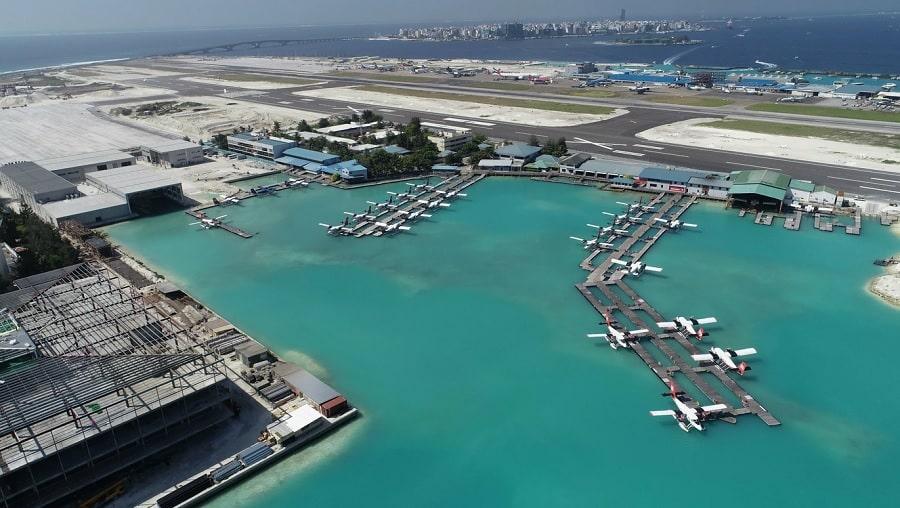
The traffic around Velana International Airport is especially complex because international large and medium jets, IFR turboprops and a large number of VFR seaplanes use the same controlled airsapces. An arriving or departing passenger jet may be moving at more than 200 knots while a seaplane is flying at around 120 to 150 knots. An IFR turboprop may also be climbing or descending at more than 1,000 feet per minute through levels used by seaplanes.
ATC must therefore think ahead and consider where the aircraft will be in the next minute or two. It is not enough to look only at where the aircraft are at that moment because a distance that appears reasonable can disappear quickly when the aircraft are on reciprocal or crossing tracks.
What Class D controlled airspace really means
Many people believe that because an aircraft is inside controlled airspace, ATC must separate it from every other aircraft. This is not correct because the actual service depends on the airspace classification and whether the aircraft are flying under IFR or VFR.
In Class D airspace, IFR and VFR flights are permitted and both are subject to air traffic control. They require an ATC clearance, must remain in two way radio communication and must follow ATC instructions. However, this does not mean that ATC applies the same separation standard between every possible combination of aircraft.
ATC separates IFR aircraft from other IFR aircraft. The controller may use vertical, lateral, longitudinal or surveillance separation, depending on the circumstances and the approved procedures.
The situation is different between an IFR aircraft and a VFR aircraft. In Class D airspace, ATC does not normally apply a prescribed separation minimum between them. Instead, the IFR aircraft receives traffic information about the VFR aircraft, while the VFR aircraft receives traffic information about other flights. Traffic-avoidance advice may also be provided when requested and practicable.
Both aircraft are still controlled because they need a clearance and must follow ATC instructions. However, the service between IFR and VFR aircraft is not the same as the separation provided between two IFR aircraft.
The absence of a prescribed IFR to VFR separation minimum does not mean that any distance between the aircraft is acceptable. It also does not mean that ATC can ignore a developing conflict simply because there is no formal minimum to infringe. The main purpose of ATC remains the prevention of collisions.
This system may work reasonably well when traffic is light, visibility is good and the pilots can easily see each other. It becomes more difficult during busy periods when several aircraft with different speeds and operating methods are using the same small area.
Around Velana International Airport, a VFR seaplane may be flying level while a passenger jet or IFR turboprop is climbing or descending through the same altitude. The controller may have given traffic information and may expect the pilots to see and avoid each other. If visual contact is not established and the tracks continue to cross, TCAS in the jet or turboprop may become the final safety barrier.
The same basic situation can occur around a domestic airport where IFR turboprops and VFR aircraft operate together in Class D controlled airspace. There may be fewer aircraft than around Velana International Airport, but a conflict can still develop if the routes cross or one aircraft climbs or descends towards the other.
How TCAS makes its prediction
TCAS means Traffic Alert and Collision Avoidance System, while ICAO normally uses the term ACAS. It operates independently of the controller’s surveillance display and uses information received from the transponders of nearby aircraft.
TCAS looks at the horizontal distance, relative altitude, direction of movement and rate of closure. It also considers whether the other aircraft is climbing, descending or flying level and then calculates the time remaining before the predicted closest point.
The system is more concerned about what may happen in the next few seconds than about the distance available at that exact moment. An aircraft that is several miles away may become a threat if it is approaching rapidly, while another aircraft that is physically closer may not become a threat if it is moving away.
The same applies vertically. Two aircraft may still have several thousand feet between them, but TCAS may predict a conflict if one is climbing rapidly and the other is descending rapidly towards it.
TCAS does not fully know the ATC plan. It does not rely only on the fact that an aircraft has been cleared to stop at a particular level, and it cannot be completely certain that the aircraft will level off there until the aircraft’s actual movement shows that the level off has begun.
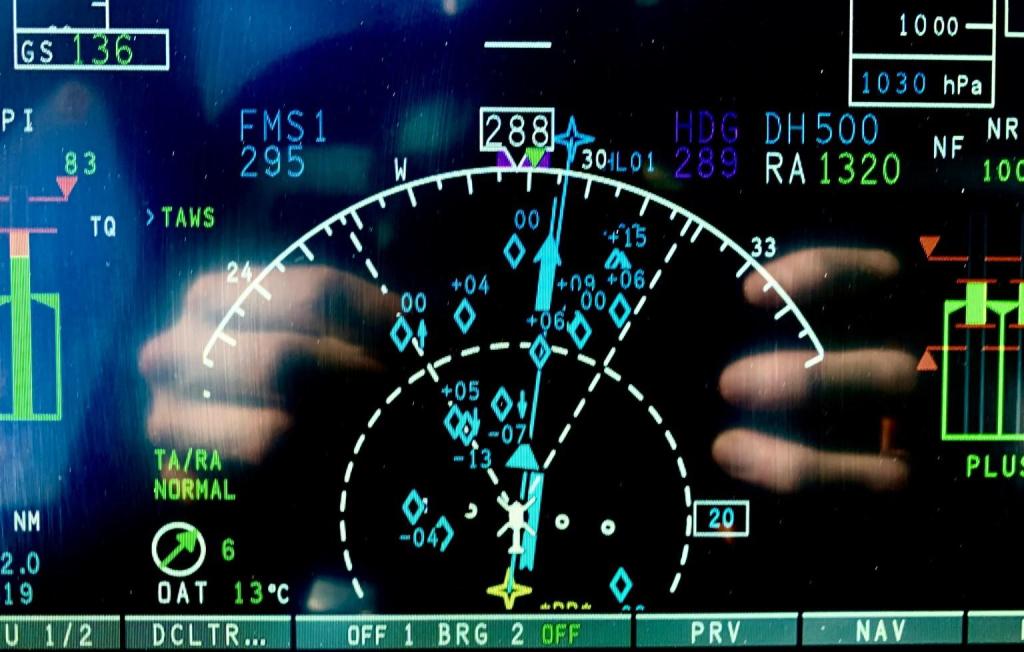
This is why TCAS can issue an alert even when ATC has assigned correctly separated levels. At that moment, the system may see the aircraft continuing vertically towards each other and predict that the distance could become unsafe.
The alert is therefore based on the actual movement of the aircraft and not only on what everyone expects the aircraft to do. That is why I describe TCAS as predictive and not conclusive.
This does not mean that TCAS is unreliable or that its warnings can be dismissed. The system must make an early prediction because waiting until a collision risk is conclusive would defeat its purpose.
The A340 and Global Express occurrence
One occurrence that I remember within Male’ TMA involved an Airbus A340 and a Global Express corporate jet. The A340 was descending towards its cleared level while the Global Express was climbing towards its own cleared level on a reciprocal track.
Both aircraft were following their clearances, and the levels assigned to them were intended to provide the required separation. However, the Global Express was climbing very quickly while the A340 was descending, and the two aircraft were also moving towards each other horizontally.
There was still more than 5,000 feet of vertical distance between the aircraft when the A340 received a TCAS RA. At first, this may appear difficult to understand because 5,000 feet is much greater than the normal 1,000 feet required between two IFR aircraft.
TCAS was not looking only at the 5,000 feet available at that moment. It was looking at how quickly the A340 was descending, how quickly the Global Express was climbing and how rapidly they were approaching each other on reciprocal tracks.
A Global Express can achieve a very high climb rate, particularly at lower and medium levels. When this is added to the A340’s descent rate, the combined vertical closing speed can be considerable and can reduce several thousand feet within a short time.
TCAS cannot be certain that both aircraft would level off exactly at their cleared levels. It therefore predicted what could happen if the A340 continued descending and the Global Express continued climbing at the same rates.
I remember the A340 pilot reporting the RA and saying words to the effect that the fast climbing corporate jet had caused it and that it was not an issue. I am not placing those words inside quotation marks because I am recalling them from memory, but that is how I remember the pilot explaining the occurrence.
The crew appeared to understand that the warning had been caused by the Global Express’s high rate of climb and the combined movement of the two aircraft. They did not appear to believe that ATC had allowed the aircraft to come close to an actual collision.
This real occurrence is a good example of the difference between what TCAS predicts and what finally happens. More than 5,000 feet remained when the RA was issued, but TCAS was looking forward and reacting to what could happen if the vertical movement continued.
The occurrence makes technical sense, provided that the combined vertical closing rate and horizontal geometry were sufficient to enter the TCAS warning time. The exact altitudes, rates, distances and timing would need to be confirmed from the surveillance and aircraft data, but the basic explanation is consistent with the way TCAS works.
The RA does not show that TCAS made a mistake because the system correctly reacted to the movement it detected. It also does not automatically show that ATC made a mistake if the aircraft were cleared to correctly separated levels, complied with their clearances and never infringed the required separation.
This is the type of event that many experienced controllers might have seen. An RA can occur while two IFR aircraft still have several thousand feet between them because TCAS is reacting to their vertical closing rate rather than waiting to see whether they will level off.
RAs between correctly separated IFR aircraft
A more common example is when one IFR aircraft is level and another aircraft is climbing or descending towards an adjacent cleared level. The controller may have correctly arranged the aircraft to remain 1,000 feet apart, but an alert can still occur if the vertical rate remains high close to the cleared level.
For example, one aircraft may be level at 6,000 feet while another is cleared to climb to 5,000 feet. The assigned levels are correctly separated and should leave 1,000 feet between the aircraft.
If the climbing aircraft continues at a high rate until very close to 5,000 feet, TCAS may predict that it could pass through the cleared level and continue towards the aircraft at 6,000 feet. TCAS may issue a TA or RA before the climbing aircraft begins to level off.
The aircraft may then level correctly at 5,000 feet and the required 1,000 feet may never be infringed. Even so, the alert was reasonable because TCAS acted on the climb rate it saw before the level off became clear.
The same can happen during descent. One aircraft may be level at 5,000 feet while another is cleared to descend to 6,000 feet. If the descending aircraft maintains a high descent rate close to 6,000 feet, TCAS may predict that it will continue below the cleared level.
The aircraft may level correctly at 6,000 feet, but the warning may already have been generated. Once again, the alert would have resulted from the prediction and not from an actual loss of separation.
The possibility becomes greater when both aircraft are moving vertically. One may be climbing towards its cleared level while the other is descending towards the next level above it. Even though the clearances provide 1,000 feet, TCAS sees the combined vertical closing speed and may act before either aircraft levels off.
From my experience, this is often the explanation for an RA where the required vertical separation was never lost. ATC may have issued correct clearances, both pilots may have complied and the aircraft may never have come closer than the required minimum.
This does not make the warning unnecessary or false. TCAS did what it was designed to do by acting on the movement of the aircraft instead of assuming that everything would happen exactly as planned.
Flight crews can reduce many of these operationally avoidable alerts by reducing the vertical speed when approaching an assigned level. This is particularly important when they know that another aircraft is level 1,000 feet above or below.
ATC can also help by giving traffic information when two IFR aircraft are climbing and descending towards adjacent levels. This makes both crews aware of each other and encourages them to control their vertical rates before TCAS predicts a conflict.
However, an RA should never be dismissed automatically as a vertical rate problem. The original surveillance information, cleared levels, actual altitudes, climb and descent rates, horizontal tracks, closest distance and TCAS sequence must be examined before reaching that conclusion.
The A320 and seaplane occurrence close to touchdown
Another occurrence that I remember involved an Airbus A320 and a VFR seaplane landind at Velana International Airport. The A320 was on final approach and about to touch down on the runway while the seaplane was landing in the opposite general direction on a seaplane landing area.
The seaplane landing area was laterally well clear of the runway. However, the axis of the seaplane landing area was in a direction that converged towards the runway centreline. To a predictive system looking only at the aircraft movements, the tracks appeared to be coming towards each other.
After landing, the A320 crew reported that they had received a TCAS TA while close to touchdown. The report was a TA and not an RA, and this is very important when understanding the event.
TCAS II is designed to inhibit all RAs below approximately 1,000 feet above ground level. It normally changes to TA only mode because a climb or descent instruction very close to the ground could create a greater danger than the other aircraft.
There are also other low altitude protections within the system. ‘Increase descent’ RAs are inhibited below approximately 1450 feet, ‘descend’ RAs are inhibited below approximately 1,100 feet and all RAs are inhibited below approximately 1,000 feet.
TCAS aural announcements are normally inhibited below approximately 500 feet, although traffic may still be shown on the cockpit display. If the A320 was literally only seconds from touchdown, the crew may have seen the TA displayed rather than heard the normal ‘Traffic, traffic’ announcement. It is also possible that the TA first appeared slightly earlier while the A320 was still above the aural inhibition height.
This is why I would describe the occurrence simply by saying that the A320 crew reported a TCAS TA while close to touchdown. Without the flight data or TCAS recording, it would not be correct to state exactly when the alert first appeared or whether it was visual, aural or both.
When the occurrence was reviewed, it was found that there were no other aircraft within about ten miles of the airport apart from the A320 and the seaplane. This strongly supported the conclusion that the seaplane’s altitude reporting transponder caused the traffic indication and TA received by the A320.
The absence of any other aircraft does not provide final technical proof by itself. However, when it is considered together with the seaplane’s position, altitude, landing direction and the timing of the A320’s report, it gives a very reasonable explanation.
The aircraft were using separate landing surfaces that were laterally clear of each other. Nevertheless, TCAS did not know that one aircraft was landing on a runway and the other on a separate seaplane landing area.
TCAS only saw two transponder equipped aircraft at low level with tracks that appeared to be converging. It could not use local knowledge about the runway, seaplane landing area or the fact that the two landing surfaces were physically separate.
The TA therefore made sense from the point of view of TCAS. At the same time, the TA alone did not prove that the A320 and seaplane were on an actual collision path.
This occurrence again shows why TCAS is predictive rather than conclusive. It warned the A320 crew about traffic that appeared threatening from the calculated geometry, but it could not decide the final safety classification of the event.
What the two real occurrences tell us
The A340 and Global Express occurrence happened with more than 5,000 feet of vertical distance remaining. The A320 and seaplane occurrence happened close to the ground, where RAs were inhibited but a TA could still be displayed.
In the first occurrence, TCAS reacted to the very high combined closing rate of two IFR aircraft moving towards their correctly separated levels. In the second occurrence, TCAS reacted to the projected converging tracks of an A320 and a transponder equipped seaplane using separate landing surfaces.
Neither occurrence by itself proves that prescribed separation was lost. They show that TCAS looks at present movement and predicts what may happen instead of waiting to confirm that a dangerous situation has already developed.
They also show why the words TA and RA must be used correctly. A TA draws the crew’s attention to a possible threat and tells the pilots to look for the traffic. An RA goes further and tells the crew what vertical action to take or avoid.
The A340 occurrence involved an RA because the aircraft was above the low-altitude inhibition and TCAS predicted a vertical conflict. The A320 occurrence involved only a TA because the aircraft was close to the ground, where the system was designed not to issue an RA.
The two reports therefore make technical sense when the different circumstances and TCAS logic are considered. They should not be treated as the same type of event merely because both involved TCAS.
How a VFR seaplane can affect a jet or turboprop
Around Velana International Airport, a VFR seaplane can cause a TCAS alert in a passenger jet as well as in an IFR turboprop. TCAS does not make this decision based on whether the aircraft has jet or propeller engines. It looks at the aircraft positions, relative altitudes, tracks, vertical rates and time remaining before the predicted closest point.
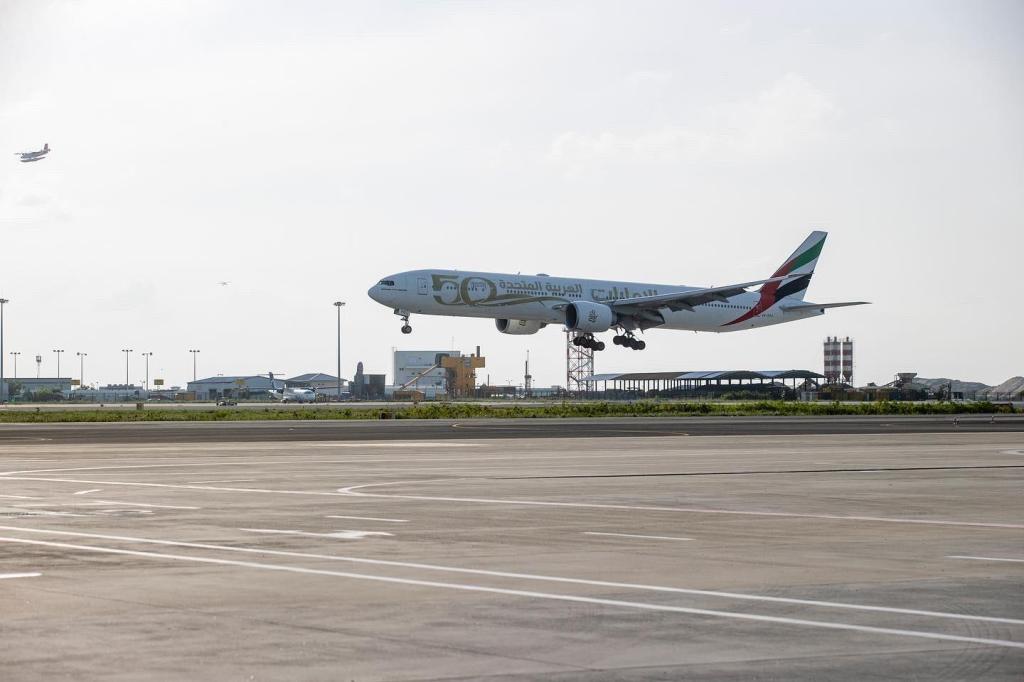
A departing passenger jet may be climbing rapidly while a seaplane is flying level nearby. An arriving jet may also be descending through the seaplane’s altitude while following an instrument approach, an arrival route or an ATC heading.
If the seaplane’s altitude reporting transponder is operating, TCAS in the jet can detect the seaplane and calculate whether its flight path may become a threat. If the predicted distance becomes too small while the jet is above the low altitude inhibition, the jet may receive a TA followed by an RA.
The same can happen to an ATR, Dash 8 or other TCAS equipped turboprop. The aircraft performance may be different, but TCAS still uses the same basic principle of predicting the future position of the traffic.
Close to the ground, the system normally remains in TA only mode. The A320 and seaplane occurrence shows that a seaplane can still appear as threatening traffic even though an RA is inhibited.
A similar situation can arise around a domestic airport where an IFR turboprop and VFR aircraft are operating in Class D airspace. The traffic volume may be lower, but TCAS will still react if the aircraft positions and movements create a predicted conflict.
The protection and limitations of the equipment
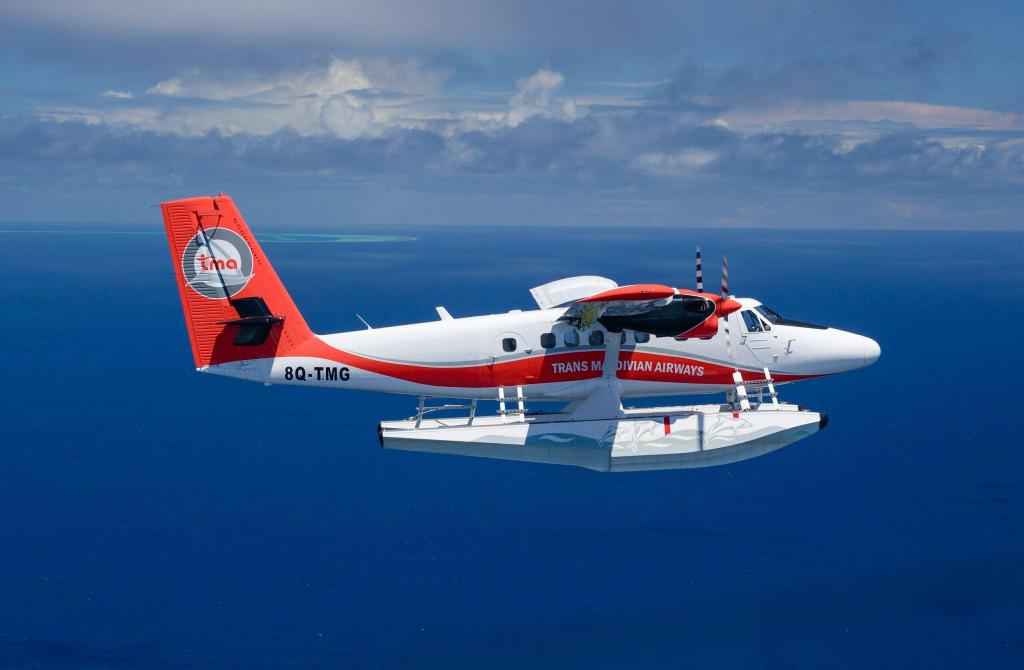
Passenger jets operating at Velana Internatioanla Airport are TCAS equipped, while IFR turboprops such as the ATR 42, ATR 72 and Dash 8 are also TCAS equipped. VFR Twin Otter seaplanes are equipped with altitude reporting transponders, allowing them to be detected by surveillance and by the TCAS carried in the IFR aircraft.
This transponder protection is important, but a transponder is not the same as TCAS. The jet or turboprop may receive an RA telling the crew to climb, descend or level off, while the seaplane pilot may receive no matching instruction.
The seaplane pilot may only have traffic information from ATC and whatever can be seen through the cockpit window. This can create a problem if the seaplane pilot decides to climb or descend at the same time that the other aircraft is following an RA.
For example, TCAS in a jet may instruct the crew to climb. The seaplane pilot may see the jet and also decide to climb, which could cause both aircraft to move in the same direction and reduce rather than increase the distance between them.
TCAS in the jet may then need to strengthen or reverse its original instruction. A strengthening RA asks for a greater climb or descent, while a reversal RA changes the original direction of the instruction.
When two TCAS equipped aircraft are involved, their systems normally coordinate with each other. One aircraft may be instructed to climb while the other is instructed to descend or reduce its vertical movement.
That coordinated protection may not be available when the seaplane has only an altitude reporting transponder. This makes early traffic information, correct visual identification and timely ATC action especially important.
The limitations of seeing and avoiding
Class D classified airspace operations depend heavily on pilots seeing and avoiding other aircraft. This may sound simple, but it is not always easy in the Maldivian environment.
A white seaplane can be difficult to see against cloud, haze, islands or the reflection from the sea. Bright sunlight, glare and rain showers can make the problem even worse.
A fast passenger jet or turboprop may remain a very small object until it is quite close. When the aircraft are on opposite or nearly opposite tracks, the other aircraft may show very little sideways movement across the windscreen even though it is rapidly getting closer.
The nose, wings and window frames of the aircraft can also block the pilot’s view. The conflicting aircraft may remain hidden at the exact time it needs to be seen.
Both crews may also be busy. The IFR crew may be following an instrument procedure, preparing for an approach, changing radio frequencies or completing checklists. The seaplane crew may be dealing with navigation, weather, radio calls, passengers and preparations for landing on water.
Even when a pilot reports the traffic in sight, visual contact may later be lost. The aircraft may disappear in cloud, glare or the background.
There may also be several similar looking seaplanes in the area around Velana International Airport. A pilot could see one seaplane and believe it is the reported traffic while the aircraft creating the actual conflict remains unseen.
For these reasons, seeing and avoiding should not be treated as a perfect safety barrier. It should be supported by reliable surveillance, sensible routes and levels, early traffic information and timely ATC action.
Traffic information must be clear enough to give the pilot a proper picture. It should include the aircraft type, relative position, direction, altitude and whether it is climbing or descending.
Passing traffic information once should not automatically end ATC involvement. If the aircraft continue to come closer and the pilots have not confirmed visual contact, ATC should continue monitoring the situation and provide updated information or avoiding action when necessary.
From ordinary traffic to a Resolution Advisory
TCAS first shows nearby aircraft as ordinary or proximate traffic. This tells the crew that another transponder equipped aircraft is nearby but has not yet been assessed as a threat.
If the other aircraft becomes a possible threat, TCAS issues a TA and the crew may hear ‘Traffic, traffic’, subject to the low altitude aural inhibitions. The TA tells the pilots to look for the aircraft and prepare for a possible RA.
Pilots should not normally make a sudden vertical manoeuvre based only on a TA. They should look for the traffic, listen to ATC information and prepare to respond if an RA follows.
If the predicted threat continues to increase and the aircraft is above the RA inhibition height, TCAS may issue a RA. The RA may tell the pilot to climb, descend, level off or reduce the rate of climb or descent.
A preventive RA tells the pilot not to enter an unsafe range of vertical speeds. It may not require a large manoeuvre if the aircraft is already moving safely.
A corrective RA requires the pilot to change the aircraft’s present vertical movement. The pilot may have to climb, descend or level off.
A strengthening RA means that the first response is not creating enough distance. A reversal RA changes the original direction, such as changing a climb instruction into a descent instruction.
When a pilot receives an RA, it must normally be followed immediately even if it conflicts with an ATC clearance. The crew should report ‘TCAS RA’, and ATC should not issue an instruction that conflicts with the RA.
When TCAS announces ‘Clear of conflict’, the crew should return towards the previous ATC clearance when it is safe and inform the controller. The correct crew response is an essential part of the protection provided by TCAS.
A TCAS alert and an AIRPROX are not the same
A TCAS TA or RA is automatically generated by the equipment during the flight. An AIRPROX classification is decided afterwards by examining the complete occurrence.
AIRPROX Category A means that a serious risk of collision existed. The aircraft may have come very close at a high closing speed, and immediate avoiding action may have prevented a collision.
A corrective, strengthening or reversal RA may support a Category A finding, but an RA alone does not automatically make the event Category A. The investigation must show that a serious collision risk actually existed.
AIRPROX Category B means that safety was not assured. The aircraft may have been placed in an unsafe situation, but the evidence does not show that there was a serious risk of collision.
AIRPROX Category C means that no actual collision risk existed. There may still have been a TA, RA, uncomfortable encounter or procedural problem, but the complete flight paths show that the aircraft would not have collided.
AIRPROX Category D means that there was not enough reliable information to determine the risk. This does not mean that the event was safe, but only that a proper conclusion could not be reached.
The smallest horizontal or vertical distance alone cannot decide the classification. The aircraft directions, speeds, vertical movements, closing rate, pilot awareness and time remaining must all be considered.
The A340 and Global Express occurrence may have involved no loss of separation even though an RA occurred. If the aircraft followed correctly separated clearances and the required separation remained available, the actual collision risk may have been low despite the warning.
The A320 and seaplane occurrence may have involved a TA caused by the projected converging tracks even though the aircraft were using separate landing surfaces. The alert still required attention, but it did not by itself prove that a collision risk existed.
Only a proper review of the recorded information can decide the correct AIRPROX classification. The crew report or TCAS alert cannot provide the final answer on its own.
Event Risk Classification and the meaning of a catastrophic outcome
A TCAS occurrence may also be examined through Event Risk Classification, normally shortened to ERC. ERC looks at what accident could reasonably have happened and how many effective barriers remained between the actual event and that outcome.
From my experience, the A340 and Global Express occurrence is a useful ERC example. The possible end of a completely uncontrolled conflict between the two aircraft could have been a mid air collision. However, if both aircraft followed correctly separated clearances and more than 5,000 feet remained when the RA occurred, several strong safety barriers were still available.
The correct ATC clearances were one barrier, the pilots levelling at their assigned levels was another and the remaining vertical distance was another. TCAS itself provided an additional final warning.
The A320 and seaplane event is another useful ERC example from my experience. TCAS saw two low level aircraft on apparently converging tracks and issued a TA. However, the aircraft were using different landing surfaces that were laterally clear, the crew received warning of the traffic and RAs were inhibited at that height.
A genuine mid air collision involving passenger aircraft could cause the loss of one or both aircraft and many lives. The credible worst outcome may therefore correctly be described as catastrophic.
The word catastrophic describes the most serious reasonably believable accident if the event continued and the remaining barriers failed. It does not mean that the TCAS report itself was catastrophic, that separation was definitely lost or that a collision was likely.
ERC must also consider how close the occurrence came to the possible accident and how effective the remaining safety barriers were. A predicted conflict with several strong barriers remaining is very different from a situation where only an immediate RA response prevented the aircraft from coming together.
These two real events from my experience help explain why the words ‘TCAS RA and ‘catastrophic credible worst outcome’ should not be read on their own. We must consider the full aircraft geometry, the actual movement and the protections that were still available.
What should be examined after a TCAS report
Every significant TCAS occurrence within Male’ TMA or control zone, or Class D control zone around a domestic airport should be properly examined. The review should use surveillance recordings, radio recordings, ATC clearances, pilot readbacks and available aircraft information.
For an event between two IFR aircraft, the investigation should first confirm whether the required separation was ever infringed. It should then determine whether the alert was mainly caused by a high rate of climb or descent near correctly assigned levels.
The actual and cleared altitudes, horizontal distance, vertical rates, directions of flight and closest point should be established. The full TCAS sequence should also be examined, including whether the warning was a TA, preventive RA, corrective RA, strengthening RA or reversal RA.
For an event involving an IFR aircraft and a VFR seaplane, the review should examine what traffic information was given and when it was given. It should determine whether the pilots saw the correct aircraft and whether visual contact was maintained.
The review should also establish whether the seaplane’s transponder return can be matched to the traffic shown by TCAS. In the A320 occurrence, the fact that there were no other aircraft within about ten miles provides strong support, but aircraft and surveillance data would give better confirmation.
The investigation should not begin by assuming that ATC made an error simply because TCAS activated. It should also not decide that the occurrence was safe merely because no formal separation minimum was infringed.
TCAS provides a prediction, while the investigation must establish what actually happened. The final conclusion must come from the complete flight geometry and all available evidence.
The number and type of TCAS occurrences should also be monitored through the Safety Management System. Repeated alerts in the same area, at the same levels or involving the same traffic flows may show a weakness in the routes, level arrangements, procedures or way traffic information is provided.
The purpose is not to discourage reporting or blame ATC or pilot whenever an alert occurs. The purpose is to understand why the situation reached the TCAS stage and what can be done to prevent it from happening again.
The real lesson from my experience
The A340 and Global Express occurrence showed how an RA could be generated while more than 5,000 feet remained because the aircraft were descending and climbing rapidly towards correctly separated levels on reciprocal tracks. It showed that TCAS was reacting to the predicted closing movement and not necessarily to an actual loss of separation.
The A320 and seaplane occurrence showed how a TA could occur close to touchdown when an aircraft on the runway and a seaplane on a separate landing area had projected tracks that appeared to converge. It also showed why TCAS can continue to provide traffic warning at low level even though RAs are inhibited.
Both occurrences make technical sense when the predictive nature of TCAS is understood. They also show why the alert itself cannot provide the final conclusion about whether separation was lost or whether an actual risk of collision existed.
Every TCAS report must therefore be examined on its own facts. ATC should not be automatically blamed because an RA occurred, and an event should not be automatically dismissed merely because no prescribed separation minimum was infringed.
Around Velana International Airport, a VFR seaplane can cause a TCAS alert in a passenger jet as well as in a turboprop. The important factors are the positions, altitudes, tracks, speeds and vertical movements of the aircraft rather than the type of engine they have.
Passenger jets and IFR turboprops are TCAS equipped, while VFR seaplanes are fitted with altitude reporting transponders. This gives an important final safety barrier, but the seaplane pilot may not receive a matching RA.
TCAS is an excellent final safety net, but it should remain the final safety net. Safe routes, sensible level arrangements, controlled vertical rates, reliable surveillance, early traffic information and timely action should prevent most conflicts before TCAS has to intervene.
 Ibrahim Khalid
Leave a comment