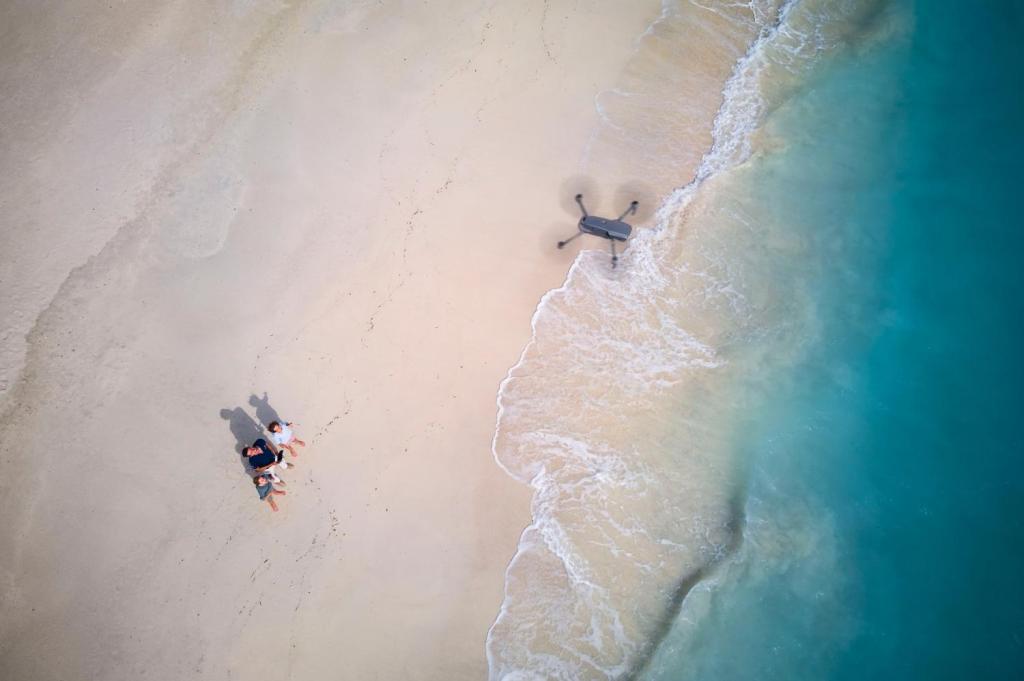
A warning for the Maldives, where drones have been reported near seaplanes and across atoll channels
A recent incident at Leipzig Halle Airport in Germany has shown how easily an ordinary looking recreational drone can become a serious aviation safety and security threat. What was found there was not a large or sophisticated military drone, but a small quadcopter similar to those used every day by tourists and amateur photographers.
The difference was that this quadcopter was reportedly carrying explosives and a detonator. It was found in a restricted part of the airport close to cargo aircraft, resulting in flights being stopped and some aircraft being diverted while the authorities dealt with the situation.
German authorities are still investigating who was responsible. Russian involvement has been strongly suspected, but this has not yet been officially confirmed, and therefore it would be wrong to say at this stage that Russia was definitely responsible.
What should concern us is the simplicity of the drone used. To a pilot, airport worker or security officer seeing it from a distance, it would have looked no different from an ordinary drone being flown to take photographs.
This incident is very relevant to Maldives. We have hundreds of resorts, safari vessels and yachts, thousands of tourists interested in aerial photography and, at the same time, a very large number of seaplane flights operating at low levels over the same islands, lagoons and channels.
Our problem is different from that of a normal airport
Most people imagine an airport as a fenced area with a runway, security staff and clearly marked boundaries. A person standing outside such an airport will normally know that aircraft are operating nearby and that flying a drone there would be dangerous.
Seaplane operations in the Maldives are completely different. Our seaplanes take off and land from lagoons and floating platforms close to beaches, water villas, jetties, boats and resorts, which are also the very places from where tourists normally want to operate their drones.
A tourist looking across a beautiful lagoon may see only open water and a good place to take an aerial video. A seaplane pilot may see the same lagoon as an approach and landing area used several times a day.
This is where the danger begins. The drone operator may not even realize that he is operating inside or close to a seaplane approach or departure path until an aircraft suddenly appears.
We have also had reports from seaplane pilots who have seen drones while crossing the channels between atolls. These are more worrying because there may not be any inhabited island or resort close to the place where the drone was seen.
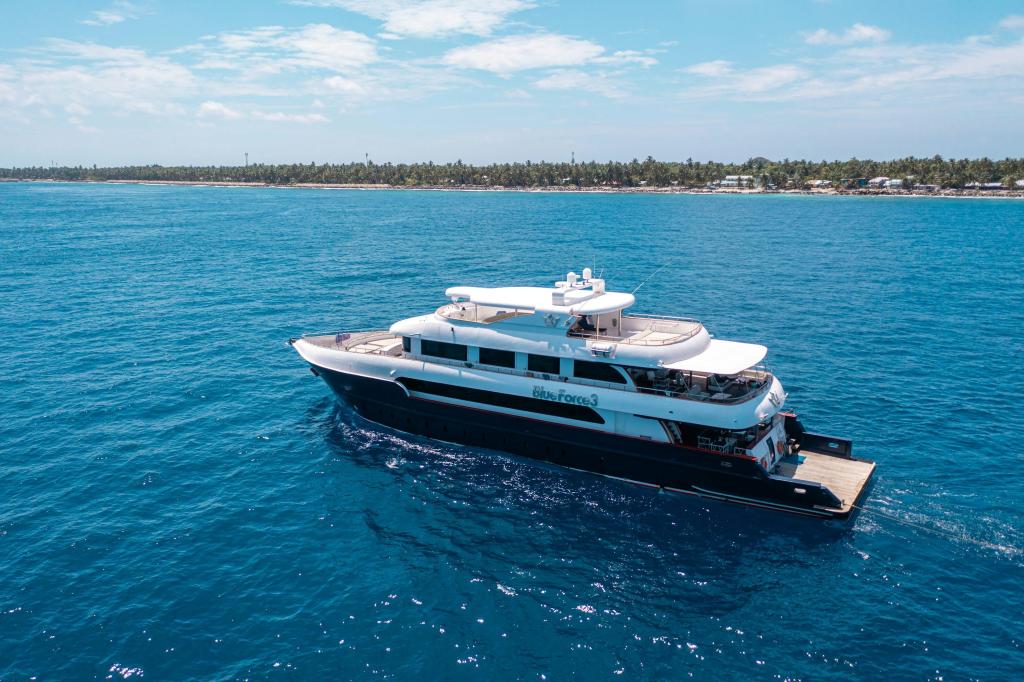
The possibility is that some of these drones were launched from safari vessels, yachts, fishing vessels or other boats. It may be difficult to prove where a drone came from because the vessel may be moving and could be some distance away by the time the seaplane pilot sees and reports it.
A person on a safari vessel may believe that the open sea is a safe place to fly a drone because there is no airport nearby. What he may not know is that seaplanes regularly cross these channels, often at comparatively low levels because their flights are short and because they must remain clear of clouds when operating under visual flight rules.
Flying a drone from a moving vessel brings another problem. The operator may be concentrating on the picture shown on the controller and may not be properly watching the drone or looking around for approaching aircraft.
He may also not hear a seaplane because of the vessel’s engines, music, wind or other noise. By the time either the drone operator or the seaplane pilot sees the other aircraft, there may be very little time left to do anything.
The vessel itself may have moved away from the place where the drone was launched. If the drone loses its control signal and automatically returns to its original launching position, it may fly towards an empty point over the sea rather than towards the vessel, creating another uncontrolled danger.
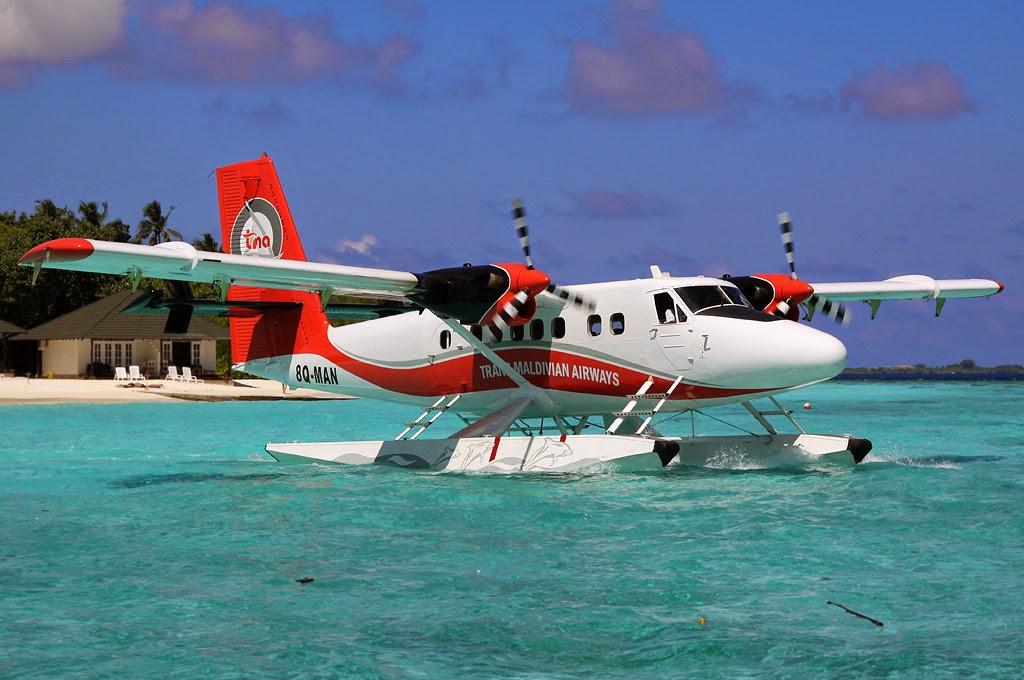
The temptation to take a close video of a seaplane
A seaplane taking off or landing is naturally an attractive subject for a tourist with a drone. A person may try to move the drone closer to the aircraft to obtain a better video without having any intention of causing danger.
The problem is that the drone operator may not correctly judge the speed and distance of the seaplane. An approaching aircraft can cover a large distance within a few seconds, and a small drone can be very difficult for the pilot to see against the sea, clouds, an island or nearby buildings.
The drone operator may think that the seaplane pilot can see the drone and simply fly around it. That is not how it works because the pilot may be carrying more than a dozen passengers and may already be dealing with wind, waves, boats, birds and other aircraft.
A seaplane is particularly vulnerable during take off and landing because it is very close to the water. If a drone suddenly appears ahead, the pilot may have to stop the approach, abandon the take off or make an immediate turn, and any of these actions can create another danger.
A sudden turn could bring a wing or float close to the water, while a sudden climb could reduce the aircraft’s speed. Even if the seaplane does not hit the drone, the avoiding action itself could result in an accident.
There is also a mistaken belief that a small drone cannot seriously damage an aircraft. The battery and electric motors inside it are hard and heavy, and a collision could damage a windscreen, propeller, wing, float, tail or another important part of the seaplane.
The drone does not have to enter the engine to cause an accident. A strike on the windscreen could injure the pilots or block their view, while a strike on a propeller or flight control surface could make the aircraft difficult to control.
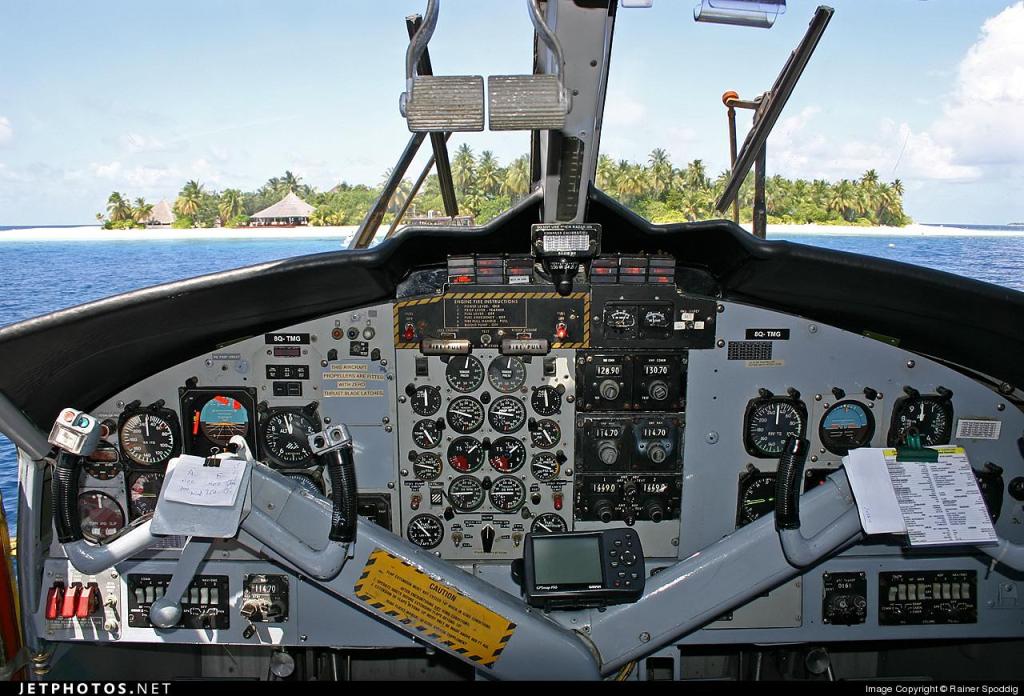
Staying below 400 feet does not make it safe
The Maldives Civil Aviation Authority (MCAA) guidance requires a drone operator to first obtain the necessary approval from the Maldives National Defence Force (MNDF) and then apply for approval from the MCAA. Depending on where the drone will be flown, the operator may also need approval from the resort, island council, airport operator or another responsible organization.
The MCAA guidance also requires drone operations to remain below 400 feet. This is important, but it does not mean that everything below 400 feet is available for drones.
A seaplane taking off or landing will also be below 400 feet. Therefore, a drone flying at only 100 or 200 feet can be directly in the path of an aircraft approaching or departing from a lagoon.
The place where the drone is being flown is just as important as its height. A drone flying at only 50 feet near a seaplane landing area may be much more dangerous than one flying higher in a remote area where there are no aircraft.
Keeping away from the floating platform alone is also not enough. The operator must consider the full approach and departure paths because a seaplane may fly over a considerable part of the lagoon before it lands or after it takes off.
Even an official approval does not give the drone priority over an aircraft. A seaplane may arrive earlier than expected, the wind may change its landing direction or another aircraft may enter the area without the drone operator knowing about it.
If an aircraft is seen or heard, the drone must be landed immediately and kept on the ground until the aircraft is well clear. The drone operator cannot expect an aircraft carrying passengers to change its flight path to avoid a recreational drone.
A person flying a drone is a pilot
The International Civil Aviation Organization (ICAO) considers the person controlling a drone to be a remote pilot. ICAO also makes it clear that this person is responsible and accountable for the safe operation of the drone.
In simple English, the person is not only operating a flying camera. He is controlling an aircraft and has a responsibility to keep it away from other aircraft.
This responsibility remains the same whether the drone is expensive or cheap and whether it is being used for business or recreation. A small drone flown for fun can still cause a serious accident involving an aircraft carrying passengers.
Most unauthorized drone flights in the Maldives will probably be caused by ignorance, carelessness or a desire to obtain a good photograph. However, after what happened in Leipzig, the authorities cannot automatically assume that every small drone near an aircraft is harmless.
A careless operator creates a safety risk, while a person deliberately using a drone to disturb or damage an aircraft creates a security threat. From the cockpit, both drones may look exactly the same, and until the operator is identified, there is no way of knowing the real intention.
The drone does not even have to carry explosives to cause major disruption. Its presence alone may force an airport or water aerodrome to stop operations, and a seaplane with passengers may then have to hold, return back to base or divert to another suitable lagoon.
Resorts and safari vessels must take responsibility
A resort receiving seaplanes must treat drone control as part of its aviation safety responsibility. It cannot be treated only as a privacy issue or left entirely to the guest who brought the drone.
Guests should be told before arrival and again during check in that bringing a drone into the Maldives does not automatically give them permission to fly it. The resort should also have one person responsible for checking the MNDF and MCAA approvals and coordinating the proposed drone flight with expected seaplane movements.
A drone should be allowed to fly only during a clearly agreed period and not at any time the guest chooses. If there is any doubt about the arrival or departure of a seaplane, the drone operation should be delayed.
Front office staff, security staff, water sports staff, boat crews and seaplane platform staff should all know what to do when an unauthorized drone is seen. Valuable time should not be lost while one department calls another to find out who is responsible.
Safari vessels must accept the same responsibility. A guest should not be allowed to launch a drone simply because the vessel is in open water and no airport can be seen.
The captain or another responsible person should approve each drone flight after considering the location and the possibility of seaplane traffic. If an aircraft is seen or heard, the drone must be brought down immediately.
A simple record of drone flights from safari vessels would also be useful. The operator’s name, the position of the vessel and the time the drone was in the air could help the authorities if a seaplane pilot later reports a sighting in the same area.
Every sighting should be reported and investigated
A seaplane pilot who sees a drone should report it as soon as possible, giving the location, estimated height, colour and direction of movement. The pilot’s first duty is to keep the aircraft safe and not to move closer to the drone in an attempt to identify it.
The flight may continue normally, or the pilot may have to discontinue the approach, delay the landing or use another lagoon. Whatever happens, a proper safety report should be submitted because an event that is not reported will normally not be investigated.
Several reports from the same location may show that the problem is connected to a particular resort, island, safari vessel or regularly used area. If pilots do not report these sightings, the authorities may wrongly believe that the problem is rare or does not exist.
The Maldives now needs one simple national procedure for dealing with a drone reported near an aircraft. The procedure should cover international and domestic airports, seaplane takeoff and landing areas, resorts, safari vessels and the channels regularly crossed by seaplanes.
The MCAA, MNDF, police, air traffic services, aircraft operators, airport operators, resorts and safari vessels all have responsibilities. What is needed is a clear arrangement saying who receives the first report, who warns other aircraft, who investigates and who has the authority to stop operations when necessary.
Resort and vessel staff should not try to shoot down a drone, throw objects at it or use unauthorized electronic jamming equipment. A falling drone can injur people, while jamming equipment may interfere with other systems and create an even greater problem.
The immediate action should be to protect aircraft operations, report the drone and, where it can be done safely, try to identify the person controlling it. The time, place and direction of the drone should be recorded, and any useful CCTV recordings should be kept for the authorities.
We should not wait for an accident
There is no need to ban all drones because they are useful for photography, inspections, surveys, search and rescue and many other purposes. What we must stop doing is treating them as harmless flying toys.
The Leipzig incident has shown that an ordinary recreational style quadcopter can be used as a serious security threat. Our own reports from seaplane pilots show that even an innocent recreational drone can become a serious safety threat when flown near a resort, water aerodrome or over a channel used by aircraft.
The Maldives cannot build airport fences around every lagoon and every channel used by seaplanes. We must instead depend on proper approvals, responsible resorts and safari vessels, better public awareness, immediate reporting and firm action against people who deliberately ignore the rules.
We should put these arrangements in place before a drone strikes a seaplane or forces a pilot into an unsafe manoeuvre close to the water. Waiting for an accident involving passengers would be far too late.
 Ibrahim Khalid
Leave a comment