Reading the Report and Comparing it with Maldives
While going through Europe’s Annual Safety Review 2025, I could not help comparing it with what I have seen during my years in Maldivian aviation. The report is mainly about Europe, but many of the safety risks mentioned in it are also very familiar to us in the Maldives. We cannot directly compare Europe’s figures with those of the Maldives because Europe has many more aircraft, airports and flights. However, the types of danger mentioned in the report can happen anywhere.
Aviation in the Maldives is different from aviation in most other countries. Large international aircraft, domestic aircraft and a large number of seaplanes operate within a relatively small area, while drones are also becoming more common. Most of this traffic comes together within Male’ Atoll and Velana International Airport. This makes our airspace and airport operations very busy, especially during the peak tourist season.
As I read the report, I found myself asking whether some of the same dangers are already present in the Maldives. I also wondered whether we are doing enough to control them before they lead to a serious accident. The report may be about Europe, but the warnings in it can also help us look more closely at our own aviation system.
A Good Safety Record Does Not Mean We Can Relax
The report says that 14 fatal accidents involving large commercial passenger and cargo aircraft happened around the world in 2024. There had been only two such accidents in 2023, so the increase was a serious reminder to the whole aviation industry. Altogether, 304 people lost their lives in these accidents. Most of the deaths came from three major accidents involving an ATR 72 in Brazil, an Embraer 190 near Aktau and a Boeing 737-800 at Muan in South Korea.
This does not mean that flying has suddenly become unsafe. Millions of flights were completed safely, but the figures show that the aviation industry can never afford to relax. A good safety record is something to be proud of, but it should never make us believe that nothing serious can happen.
During my years with Maldives Airports Company, I have watched our aviation industry grow from a very small operation into the busy system we have today. Many flights are completed safely every day, but this can sometimes give people the feeling that the present system is good enough. When the same operation is completed safely every day, people may slowly become less concerned about the risks that are still there.
Most accidents do not happen because of one mistake. They normally happen when several small problems come together at the same time and the final safety protection also fails. This is why we must take incidents and warning signs seriously, even when nobody is injured and no aircraft is damaged. An incident that ends safely today may end very differently the next time it happens.
Smaller Aircraft Also Need Full Safety Attention
One section of the European report looks at smaller aircraft used for commercial operations. These include air taxis, sightseeing aircraft, air ambulances and smaller passenger and cargo aircraft. There were no fatal accidents in this group in Europe during 2024. However, there were three non fatal accidents, which was higher than the yearly average for the previous ten years.
One aircraft made an emergency landing after losing engine power. Another aircraft failed to get airborne and continued beyond the runway. During the five years from 2020 to 2024, the main accident areas included engine problems, aircraft coming too close to each other, bad weather, windshear, thunderstorms and aircraft landing short of or going beyond the runway. All these dangers are also relevant to operations in the Maldives.
Our domestic aircraft and seaplanes operate in high temperatures, strong winds, heavy rain and weather that can change very quickly. Seaplanes are also exposed to seawater and may complete many short flights, take offs and landings in one day. These conditions place pressure on the aircraft, crews, engineers and the whole operation.
A smaller aircraft may carry fewer passengers than a large jet. However, this does not make its operation less important or its passengers less deserving of proper safety protection. Domestic aircraft and seaplanes carry thousands of tourists and Maldivians every day. They are an important part of our transport system and the tourism industry, so their safety must receive the same serious attention.
The Danger of a Runway Collision
One of the strongest warnings in the report is about the danger of a runway collision. For smaller commercial aircraft, the European Aviation Safety Agency (EASA) found that collision on the runway was the highest safety risk. Mid air collisions came second, followed by collision with terrain. This does not mean that all these accidents actually happened, but it means that reported incidents had the possibility of ending in such accidents.
A runway collision can happen between two aircraft. It can also happen between an aircraft and a vehicle, a person or a piece of equipment. It can begin with a very simple mistake. A driver may misunderstand a clearance, a vehicle may enter the runway without permission, a pilot may enter the wrong runway, or a controller may forget that a vehicle is still on the runway.
Poor visibility, heavy workload and radio problems can make the situation worse. Once an aircraft has started its take off run, there may be only a few seconds left to correct the mistake. What begins as a small misunderstanding can therefore become a very serious situation within a short time.
This is very relevant to Velana International Airport. The airport handles large jets, medium and small turboprop aircraft, service vehicles, construction vehicles and many other movements within a limited area. All these aircraft and vehicles must use the available space safely, even during the busiest periods.
Runway safety should not depend only on the controller remembering the position of every aircraft and vehicle. Pilots and vehicle drivers should also not have to depend only on what they can see. Clear procedures, proper radio use, stop bars, vehicle tracking, surface surveillance and automatic warning systems can provide extra protection. These systems do not replace people, but they can warn them when a mistake has been made.
Aircraft Coming Too Close to Each Other in the Air
For air traffic management, the European report found that the possibility of a mid air collision was the highest safety risk. Collision on the runway was second, while collision with terrain was third. This finding immediately made me think about the airspace around Male’. Our situation is unusual because a large number of VFR seaplanes operate together with international and domestic IFR aircraft.
During busy periods, many seaplanes may be departing, arriving, climbing, descending and crossing the routes used by larger aircraft. This happens within a small area and sometimes at the same or nearby altitudes. The amount of traffic can be particularly high during the morning and afternoon peak periods.
For many years, seaplanes have depended heavily on pilots seeing and avoiding other aircraft. This is still important, but we must accept that it has limits. A pilot may not see another aircraft because of cloud, rain, haze, bright sunlight, the aircraft structure or a heavy cockpit workload. A seaplane several miles away may appear as only a very small dot.
The danger becomes more serious when an IFR aircraft and a VFR seaplane are flying close to the same altitude. Even if both aircraft are following their instructions, they may still come close enough to trigger a traffic warning or a TCAS resolution advisory in the larger aircraft. A collision may not happen, but a sudden avoiding action can create another danger. It can cause loss of control, injuries to passengers or a conflict with another aircraft nearby.
The European findings support the need for better surveillance of seaplanes inside the Male’ TMA. If controllers can see the position and altitude of each seaplane on a surveillance display, they have a better chance of noticing a problem early. They can then pass useful traffic information before the aircraft come too close to each other.
Surveillance based flight following would not make a VFR seaplane an IFR aircraft. It would only give controllers better information about where the seaplane is and where it is going. With the amount of mixed traffic we now have around Male’, depending mainly on pilots seeing one another may no longer be enough. Better surveillance can add another important layer of safety.
Drones Are Now a Real Aviation Danger
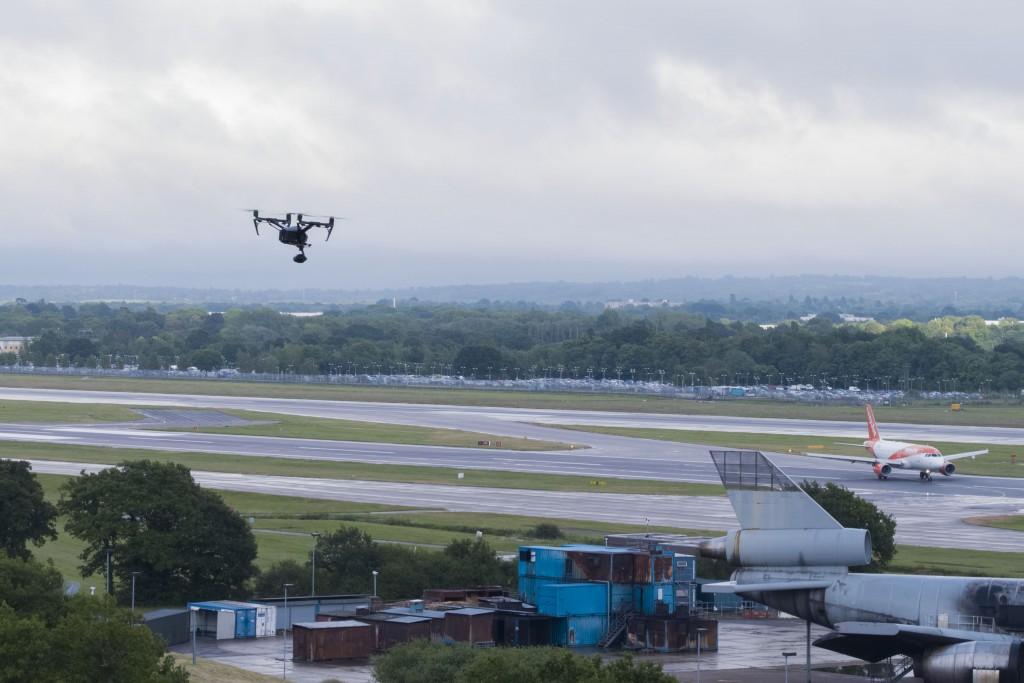
The European report also looks at drones. In 2024, Europe recorded 15 non fatal drone accidents and six serious drone incidents. Seven of these accidents and serious incidents involved manned aircraft. The aircraft involved included Airbus A320, A321 and A340 aircraft, a Bombardier aircraft, a Robinson R44 helicopter and a glider.
One event involved an actual collision between a small drone and a small aircraft. The drone weighed only about 250 grams, but it still caused minor damage to the aircraft. This shows that even a very small drone can cause damage when it hits an aircraft in flight.
In many of the serious incidents, the authorities could not identify the drone or the person flying it. This is one of the main problems with illegal drone flying. The pilot of an aircraft may report seeing a drone, but it is often very difficult to find the operator. By the time anyone reaches the area, the drone and the person flying it may already be gone.
This is highly relevant to the Maldives because drones are now widely used by resorts, tourists, photographers, construction companies and individuals. Many people see a drone only as a small flying camera and may not understand that it can be dangerous to another aircraft. They may also not know the routes and altitudes used by seaplanes and other low flying aircraft.
The danger is especially high near seaplane operating areas. Seaplanes fly at low altitudes when taking off, landing and operating close to resorts. A person may think it is safe to fly a drone because the resort is far away from Velana International Airport. However, that drone may be directly in the path of a seaplane carrying passengers.
Even a small drone can damage a windscreen, propeller, wing, tail or engine. A pilot trying to avoid a drone may also loose control or strike the water or another obstacle. The danger is therefore not only from the drone striking the aircraft, but also from the action the pilot may have to take to avoid it.
The Maldives needs drone rules that are simple and easy for everyone to understand. Resorts, island councils, guesthouses, photographers and tourists must clearly know where drone flying is not allowed and where permission is needed. Drone sightings near aircraft must also be properly reported and recorded. If we know where these incidents are happening, we can identify the dangerous areas and take action.
Accidents on the Ground
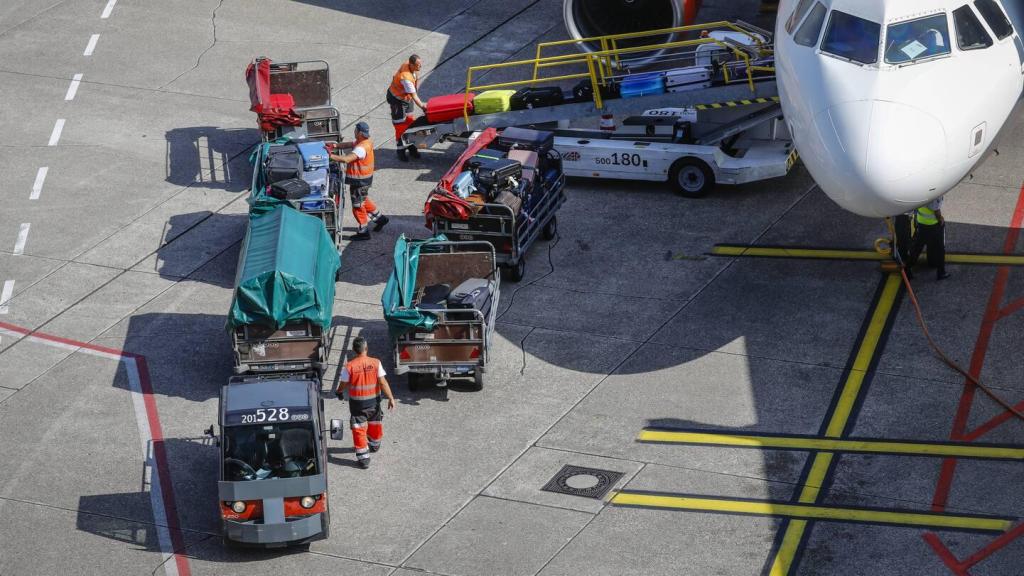
The European report recorded seven non fatal accidents connected with airports and ground handling in 2024. Three people were seriously injured in these accidents. During the five years from 2020 to 2024, ground collisions were the most common type of accident in this area. These were followed by accidents connected with ramp and ground handling work.
Ground accidents can happen when an aircraft hits a vehicle or a piece of equipment. They can also happen when a vehicle hits an aircraft during loading, unloading, refuelling, towing or passenger boarding. Some of these accidents may cause injuries, while others may damage the aircraft or ground equipment.
This is an important risk at Velana International Airport. The apron is busy with aircraft, passenger buses, baggage tractors, fuel vehicles, cargo equipment, catering vehicles and many people moving around. All of them have to work close to aircraft within a limited space.
Damage to an aircraft on the ground may sometimes look small. However, damage that is not found before departure can later become a serious problem in the air. Even a small strike by a vehicle or piece of equipment should therefore be reported and properly checked.
The same danger exists at domestic airports and seaplane bases. Workers can become so used to their daily work that they may not notice how close they are coming to danger. Clear driving routes, speed limits, proper parking areas, good lighting, staff training and close supervision are important. These basic safety measures must be followed every day, even when the work looks simple and familiar.
The Danger from Lithium Batteries
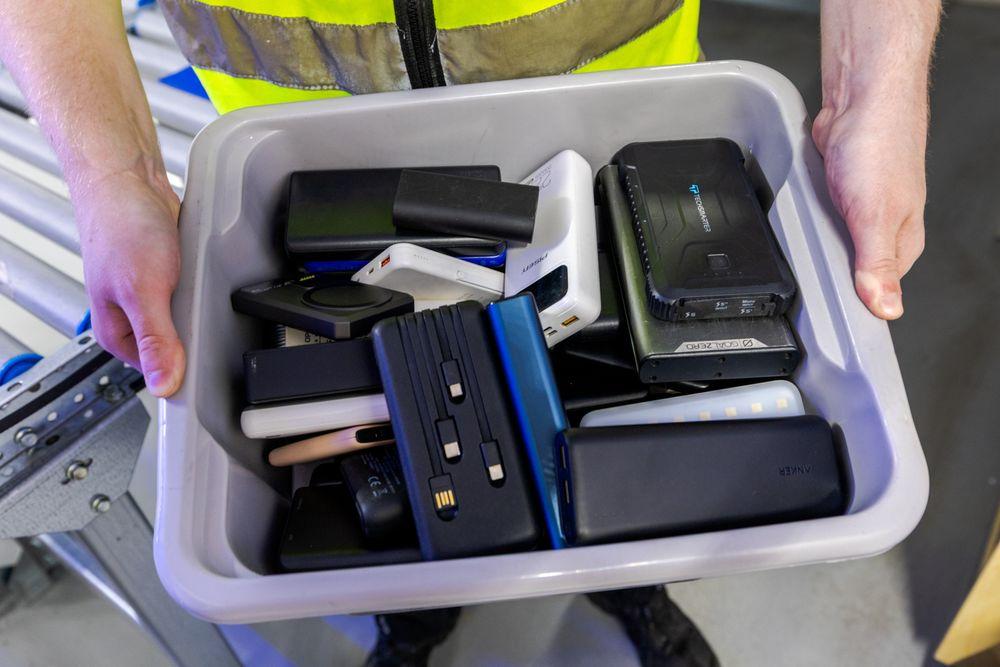
The report found that fire, smoke and pressurization had become the highest safety risk in European airport and ground handling operations. EASA believes that one reason was the number of dangerous goods and batteries found in checked baggage. This is also important for the Maldives because tourists travel with many battery powered items.
These items include mobile phones, laptops, cameras, power banks, electronic cigarettes, diving lights, drones and spare drone batteries. Many passengers do not know which batteries are allowed in checked baggage and which must be carried in hand baggage. This danger can continue when a passenger transfers from an international flight to a domestic aircraft or seaplane.
A battery fire can spread very quickly and can be difficult to control. It can be even more dangerous inside a small aircraft with limited space and firefighting equipment. A short flight does not remove the danger because a battery fire can develop within a very short time.
Airports and operators should give passengers clear information about power banks, electronic cigarettes and spare batteries. Check in and security staff must also be properly trained to find these items before the baggage is loaded. This information should be given in simple language that passengers can easily understand.
More Reports Can Mean Better Safety
Europe recorded its highest safety reporting rate since 2016. In 2024, it received 35 safety reports for every 1,000 airport movements, compared with only 15 reports in 2016. A higher number of reports does not always mean that safety is getting worse. It may mean that more people are willing to report mistakes, hazards and unusual events.
This is a very important lesson for the Maldives. A safety report should not automatically be treated as a complaint against someone or as proof that the person is not good at the job. A report should be seen as a chance to find and correct a problem.
A pilot who reports a confusing procedure may prevent another pilot from making a serious mistake. A controller who reports a loss of separation may help to find a weakness in the air traffic system. A ground worker who reports an unsafe vehicle movement may prevent a runway incursion. Every honest report gives the organization a chance to correct a problem before somebody is killed or injured.
If people believe that they will be punished or embarrassed for reporting an honest mistake, they will remain silent. The organization will then loose the opportunity to learn from the event. People must be able to report safety matters without unnecessary fear, while still being responsible for deliberate or careless actions.
Receiving reports is only the first step. Every important report must be studied, the real causes must be found and the necessary action must be completed. If reports are only collected and filed away, they will not improve safety.
Not Every Incident Has the Same Danger
The European report also shows that even Europe has difficulty in properly classifying every safety report. Around 690,000 reports were collected during 2023 and 2024, but two out of every five did not have a completed risk score. This shows that collecting a large number of reports is not enough. The reports must be turned into useful safety information.
The Maldives should not measure its reporting system only by counting how many reports are received. We must also find out which events came closest to causing an accident. Some incidents may cause damage but have limited danger, while others may cause no damage but come very close to a major accident.
For example, a vehicle may lightly touch a parked aircraft and cause some damage. In another event, a vehicle may enter an active runway in front of a departing aircraft but escape without being hit. The first event caused damage, while the second event may have caused no damage at all. However, the second event had the possibility of killing many people and should therefore receive much greater attention.
We need to look at what actually happened and what could have happened. We also need to find out which safety protections failed and why they failed. This will help us give priority to the events that carry the greatest danger.
Maldives Needs Its Own Annual Safety Review
The most useful part of Europe’s review is the way it brings safety information from the whole aviation system together. It covers airlines, smaller aircraft, helicopters, drones, airports, ground handling and air traffic services. This gives a wider picture of the main risks affecting the whole aviation system.
I believe the Maldives should produce its own national annual aviation safety review. It does not have to be as long or as complicated as the European report, but it should give us a clear picture of our main aviation risks. It should be written in a way that people working in aviation, government officials and ordinary members of the public can understand.
It should bring together information from international and domestic airlines, seaplane operators, air traffic services, airports, ground handlers, maintenance organizations, drone reports and aircraft accident investigations. It should show how many accidents, serious incidents and other important safety events happened during the year. It should also explain the main risks found from these events.
The review should compare the findings with previous years. This would help us to see whether a particular danger is increasing, decreasing or remaining the same. It would also allow us to see whether the safety actions already taken are producing the expected results.
Special attention should be given to aircraft coming too close to each other, TCAS warnings, runway incursions, unstable approaches, seaplane accidents, drone sightings, ground collisions, dangerous goods, communication failures and operations in bad weather. These are some of the areas that matter most to our aviation system. Other risks can also be added when they appear from the information collected.
The purpose should not be to name or blame individuals. Personal information can be protected while the important safety lessons are shared with the aviation industry. The main purpose should be to learn from the events and prevent them from happening again.
What the Report Tells Us
Most of the dangers mentioned in Europe’s report are not new to me. Airborne collision, runway collision, loss of control, bad weather, runway excursions, ground damage, battery fires and drone encounters have been known for many years. What has changed is the amount of traffic and the difficulty of managing it.
A system that worked well when there were only a few flights may not be enough for the traffic we have today. A procedure that was suitable when seaplane traffic was light may not give enough protection when many seaplanes are operating together with international and domestic aircraft. As traffic grows, the safety arrangements must also be reviewed and improved.
The growth of drones has now added another danger to our skies. More airport traffic also means more vehicles, equipment and people moving around aircraft. Passengers are carrying more battery powered equipment than ever before, and this brings another type of risk. All these changes must be properly considered when we plan for aviation safety.
Our safety system must grow together with our aviation industry. Better surveillance of seaplanes, stronger runway protection, proper control of drones, better reporting and a national annual aviation safety review can all help us move in the right direction. These are practical steps that can give us a clearer picture of our risks and help prevent accidents.
Europe’s Annual Safety Review 2025 is not a report about the Maldives. However, while reading it, I could clearly see many of our own risks in its pages. We should use these warnings to look carefully at our aviation system and take action while we still have the opportunity. It is always better to learn from a warning than to wait until the same danger becomes an accident in the Maldives.
 Ibrahim Khalid
Leave a comment