An Aircraft Full of Batteries
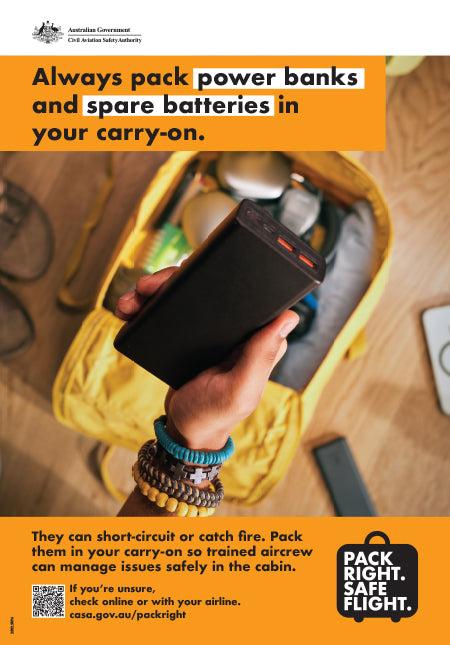
When we travel today, most of us carry several rechargeable devices without giving them much thought. A passenger may have a mobile phone, laptop, tablet, wireless earphones, electronic watch and a power bank inside the same piece of hand baggage. A business traveller may carry even more. Each item appears small and harmless, but when several hundred passengers board an aircraft, the numbers quickly add up. A typical narrowbody aircraft may be carrying between 700 and 800 rechargeable devices, while a large widebody aircraft may have more than 1,500. In other words, a modern passenger aircraft is not only carrying people and baggage. It is also carrying hundreds, and sometimes more than a thousand, small energy storage devices.
This matter was recently discussed by David Wroth, vice-president of standards, technology and operations at UL Standards & Engagement, during an Air Line Pilots Association safety forum. UL Standards & Engagement, commonly known as ULSE, is an independent nonprofit safety organization. It develops safety standards, carries out research and helps industries and the public understand risks connected with products and new technologies. ULSE also manages the Thermal Runaway Incident Program, known as TRIP, which collects and studies information about lithium battery incidents on aircraft. According to Wroth, reported lithium battery incidents aboard aircraft increased by 15% in one year, and power banks, also known as portable chargers, have now become the most common source of these incidents.
This does not mean that every power bank is dangerous. Millions of them are used every day without any problem. However, passengers are carrying more devices than before and are also using power banks more frequently during flights. Even if the chance of one battery failing is very small, the overall risk increases when every flight carries hundreds of them. This is a simple safety management principle. When the level of exposure increases, the total risk may also increase, even when the failure of an individual item remains unlikely.
What Happens When a Battery Fails?
A serious battery failure can begin with something that appears quite minor. A passenger may notice that a power bank feels unusually hot, or there may be a strange smell, a hissing sound or a small amount of smoke coming from a bag. The passenger may initially think that the device is simply warming up while charging. However, within seconds, the situation can become much more serious. A damaged or defective lithium battery can enter a condition known as thermal runaway. In simple language, this means that the battery begins to produce heat faster than it can release it. The heat starts further chemical reactions inside the battery, which produce still more heat, and the temperature then rises very rapidly.
During thermal runaway, the battery may release toxic and flammable gases, produce thick smoke, burst into flames or even explode. The reaction can also spread from one battery cell to another. This is not quite the same as an ordinary fire because extinguishing the visible flame does not necessarily mean that the danger has ended. The battery may remain dangerously hot inside, and unless it is properly cooled, it can catch fire again. This is why cabin crew procedures normally require them first to control the visible flames and then cool the device and continue watching it for any sign of reignition.
A battery may fail because it is defective, counterfeit, badly manufactured, crushed, punctured, overheated or charged incorrectly. A mobile phone can also fall between the parts of an electrically operated passenger seat. If the passenger then moves the seat while trying to recover the phone, the mechanism may crush the device and damage its battery. A passenger should therefore never operate the seat after a phone or another electronic device has fallen into its mechanism. The cabin crew should be informed immediately so that the device can be recovered safely.
Power banks require particular attention because they store a considerable amount of energy in a small container. They are often carried inside crowded bags together with keys, coins and other metal objects. Some passengers use them while they are covered by clothing or blankets, or while they are placed between seat cushions, where overheating may not be noticed immediately. There is also no easy way for an ordinary passenger to know the true quality of every power bank. A cheap or counterfeit device may look perfectly normal from the outside but may not contain proper protection against overheating, overcharging or an internal short circuit.
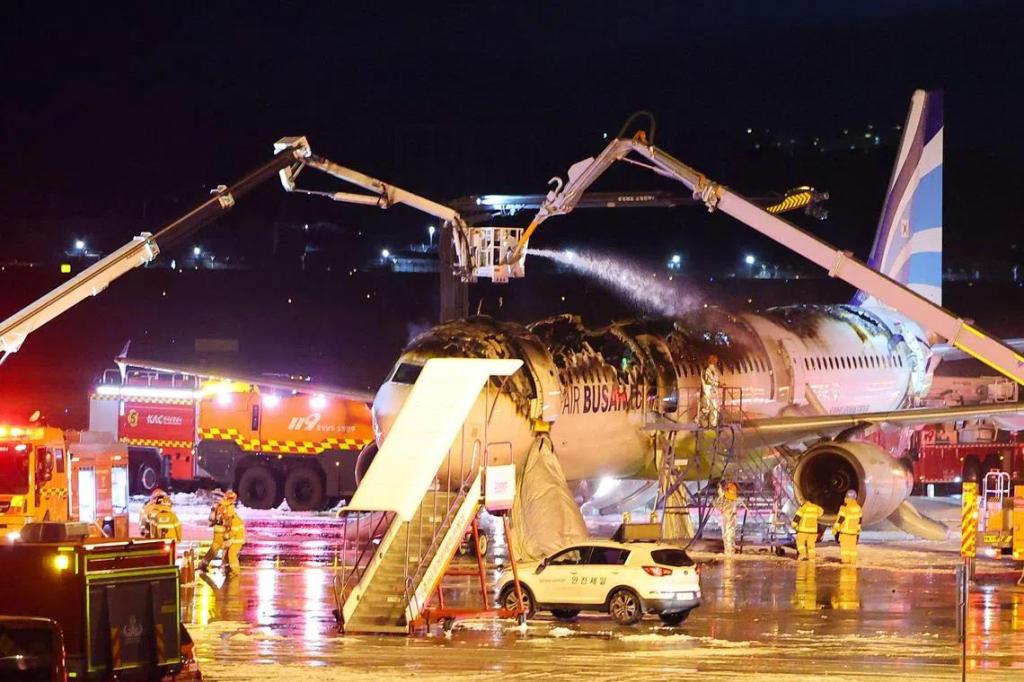
The danger is no longer only theoretical. A portable charger was reported to have been responsible for the fire that destroyed an Air Busan aircraft in 2025. Fortunately, the aircraft was still on the ground, and everyone was evacuated with only minor injuries reported. Had the same event occurred during flight, particularly over the ocean and far from a suitable airport, the crew would have faced a much more difficult situation.
The First Response Inside the Aircraft
The way passengers react can either help or make the situation worse. Most passengers have never seen a lithium battery fail and may not understand what is happening. When smoke or flames suddenly appear, some may panic, stand up and move into the aisle. Others may try to pick up the burning device, cover it with something or use whatever liquid happens to be nearby. Some passengers may take out their phones and begin recording the event. Although they may mean well, these actions can block the aisle, delay the cabin crew and place more people in danger.
The best action for a passenger is to inform the cabin crew immediately and follow their instructions. A phone, power bank or other device that becomes very hot, begins to swell, gives off an unusual smell or makes a hissing sound should be reported before smoke or flames appear. Passengers should not wait to see whether the problem disappears by itself, and they should not attempt to move or handle a smoking device unless instructed to do so by the cabin crew.
Cabin crew are the first responders to an inflight battery incident. They must locate the affected device, inform the pilots, control any visible flames, cool the battery and watch it for possible reignition. At the same time, they must calm the passengers, keep the aisle clear and prevent people from crowding around the affected area. Most reported battery incidents occur in the passenger cabin, and this at least gives the crew a better chance of seeing the warning signs and reaching the device quickly. Many incidents are brought under control before they develop into a major fire, but that depends on early reporting, proper equipment and well trained cabin crew.
The pilots will receive information from the cabin while continuing to fly the aircraft. They need to know what type of device is involved, where it is located, whether there is smoke or fire, whether the flames have been extinguished and whether the situation appears to be under control. Based on this information, the captain must decide whether to continue the flight, return to the departure airport or divert to another airport. Nearly one in five reported thermal runaway incidents is said to result in a return to the gate, a diversion or an unplanned deplaning.
This decision may have to be made at cruising altitude, possibly over the ocean, and with incomplete information. The cabin crew may be dealing with smoke, frightened passengers and a battery that could catch fire again. A report of an unusual smell, excessive heat or smoke must therefore be treated as important safety information and not as a minor passenger inconvenience. Good communication between the cabin and the flight deck can make the difference between a controlled incident and a serious emergency.
What the Airport Operator Must Do
The matter does not concern the airline alone. The airport operator also has an important part to play, particularly when an aircraft returns or diverts because of a battery fire. Let us imagine that an aircraft reports smoke or fire from a power bank while approaching an airport. Air traffic control will normally inform the airport rescue and firefighting service and other relevant airport units. Depending on the seriousness of the report, the airport emergency plan may have to be activated. The airport operator should make sure that the emergency responders receive clear information about the aircraft type, number of persons on board, location of the incident inside the aircraft, whether smoke or flames are still present and whether the captain expects to evacuate.
A suitable parking position must also be selected before the aircraft lands. It may not be wise to send the aircraft directly to a normal passenger gate, particularly when there is continuing smoke or a possibility that the passengers may have to evacuate. A remote stand may be more suitable because emergency vehicles can approach the aircraft more easily and any fire or smoke will be kept farther away from the terminal, other aircraft and people on the apron. The taxi route to that position should be kept clear, and vehicles or equipment that could delay the aircraft or emergency services should be moved away.
The airport operator must coordinate the actions of airport operations staff, apron control, rescue and firefighting services, medical teams, security personnel, ground handlers and the airline. Everyone needs to know what is happening, where the aircraft will stop and what is expected of them. Poor coordination can easily create another hazard. Too many vehicles may gather around the aircraft, access for fire appliances may become blocked, or unprotected staff may approach before the situation has been made safe. The emergency response should therefore be controlled through established procedures and a clear chain of command.
If the captain orders an evacuation, the airport rescue and firefighting service must be ready to protect the escape routes and assist the passengers. Medical personnel should be prepared to treat anyone affected by smoke, burns or injuries suffered during the evacuation. The airport must also be ready to receive a large number of people suddenly arriving on the apron. Some may be frightened or confused, and families may become separated. There may be elderly passengers, children and people who require assistance. Safe transport should be arranged to take them from the aircraft to the terminal or another protected area, and they should not be allowed to wander around an active apron where aircraft, emergency vehicles and ground equipment may still be moving.
The affected device may remain dangerous even after it has been removed from the aircraft. It should not simply be carried into the terminal or left unattended on the apron because it may still be hot and could catch fire again. The airport should have a safe place and suitable arrangements for containing, monitoring and eventually disposing of a damaged lithium battery. The people handling it must understand the danger and use the correct equipment and procedures.
When the Incident Occurs at the Gate
If a battery catches fire while the aircraft is still at the gate, the response may be even more complicated. Passengers may already be boarding, ground staff may be working around the aircraft, catering and baggage loading may be taking place, and the aircraft may be receiving fuel. An apparently small fire inside the cabin can therefore affect many different airport activities within a very short time. Emergency services must be called immediately, passengers may have to leave the aircraft, and people in the gate area may need to be moved away.
If refuelling is taking place, the fuel supplier and the person responsible for refuelling safety must be informed without delay. The airport operator must also consider whether nearby aircraft stands, taxi lanes or parts of the terminal may be affected. Smoke entering the terminal could require the local evacuation or isolation of part of the building. Vehicles and equipment around the aircraft should be moved only when it is safe to do so and without blocking access for fire appliances, ambulances or other emergency vehicles.
There is also the possibility of passengers beginning an evacuation without being told to do so. If they see smoke through the aircraft windows or hear people shouting, they may try to leave quickly and carry their cabin baggage with them. This can slow the evacuation, block exits and cause injuries. Airport and airline staff at the gate should therefore know how to control the area, give clear instructions and guide passengers to a safe place without interfering with the work of the emergency responders.
Learning Through the Safety Management System
Once the immediate danger has passed, the work should not end. The incident should be reported and examined through both the airline’s and the airport operator’s Safety Management Systems. The review should look beyond the simple fact that a battery caught fire. It should examine how quickly the warning signs were reported, whether the emergency message was clear, how long the rescue and firefighting service took to arrive, whether the chosen parking position was suitable and whether the passengers were handled safely.
It should also consider whether emergency vehicles had clear access, whether everyone understood their responsibilities and whether the airport and airline procedures worked together. The purpose should not simply be to find someone to blame. It should be to understand what happened, identify weaknesses and prevent a similar event from becoming more serious in the future. Even a small occurrence in which a battery only overheated can provide a useful warning. Safety management depends on learning from these early signs instead of waiting for an aircraft to be badly damaged or people to be injured.
Airport emergency exercises should include lithium battery events. A useful exercise could involve an arriving aircraft reporting smoke from a power bank, followed by a landing, remote parking and a possible passenger evacuation. This would test communication and coordination among the pilots, air traffic control, airport operations, rescue and firefighting services, medical teams, security personnel, ground handlers and the airline. It would also show whether the airport has a suitable place to keep a damaged battery after it has been removed from the aircraft and whether staff know who should take control of it.
Airports should also support passenger education. Clear and simple information can be displayed at check in counters, security screening points and boarding gates. Passengers should understand that power banks must normally be carried in the cabin and not placed in checked baggage. They should keep them accessible, protect them from damage and immediately report any sign of excessive heat, swelling, smoke or an unusual smell. Security screening and airline check in staff should also know what to do when they see a visibly damaged, swollen or leaking battery. The best time to control the hazard is before the device reaches the aircraft.
The Main Safety Lesson
Lithium batteries are now part of everyday life, and we cannot remove them completely from air travel. Nor should we create unnecessary fear, because most batteries are carried and used safely. However, the operating environment has changed. Passengers are carrying more rechargeable devices, power banks are becoming more powerful, and the number of reported incidents is increasing. Our safety arrangements must therefore change with the risk.
This is the real safety management lesson. We should not wait for a major accident before taking action. Airlines and airport operators must identify the changing hazard, train their staff, educate passengers, prepare their emergency response and learn from every occurrence, including the smaller ones. The airport operator must consider not only how to respond when the aircraft lands, but also where it will park, how passengers will be handled, how the affected battery will be kept safe and how normal airport operations will be protected.
A battery event may begin with a little heat or a faint smell coming from a passenger’s bag. If it is noticed early and handled correctly, it may remain a minor incident. If the warning signs are missed, communication is poor or people are not prepared, the same small device can create a serious emergency involving the aircraft, the terminal and many different airport services. Good safety management is about recognizing that possibility and being ready before the first sign of smoke appears.


Leave a comment