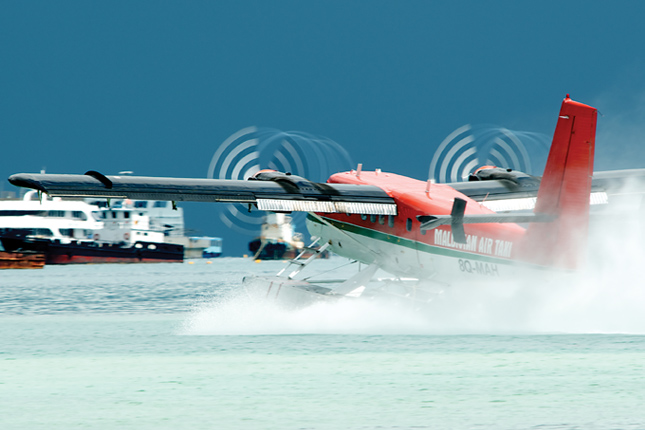
Today, the Maldives has one of the largest seaplane operations in the world. Seaplanes have become a familiar sight in our skies and an important part of our tourism industry. Every day, they carry hundreds of tourists between Velana International Airport and resorts across the country. However, this large operation started in a very small and simple way. It began with only a few aircraft, basic passenger facilities and one narrow area of water for takeoffs and landings. As more resorts opened and more tourists came to the Maldives, the seaplane operation also had to grow. Having worked in Maldivian aviation throughout much of this period, I was able to see many of these changes taking place. This is the Maldives seaplane story as I saw it develop.
How the Seaplane Story Began
Regular seaplane services in the Maldives began in 1993. A group of Danish aviation pioneers started the operation to carry tourists between Male’ International Airport, now called Velana International Airport, and resorts farther away. Helicopters were also being used to carry tourists at that time. Sadly, there were some fatal helicopter accidents, and these accidents caused serious public concern about helicopter safety. A particular type of helicopter was later banned from operating in the country. The tourism industry was then left with two main choices for carrying tourists to distant resorts. They could go by boat or by seaplane.
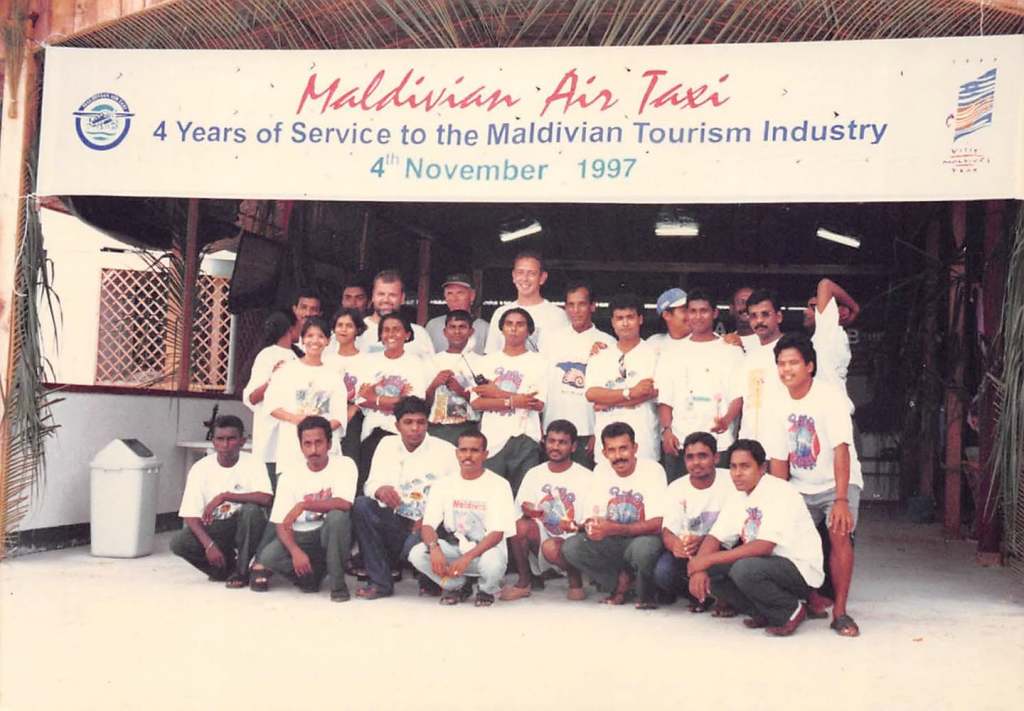
This happened at a time when resorts were beginning to open on islands farther away from Male’. A boat journey to some of these resorts could take four or five hours and sometimes even longer during bad weather. The journey could also become very uncomfortable when the sea was rough. A seaplane could cover the same distance in about 30 or 40 minutes. It cost more than travelling by boat, but it saved several hours and gave tourists a beautiful view of the islands, reefs and lagoons. The seaplane soon became an important part of Maldivian tourism. It made possible to develop resorts on islands that had previously been considered too far away.
The First Seaplane Base
The first regular seaplane operation was based in the lagoon on the eastern side of the airport island. The main seaplane operation is still based in the same general area today. The facilities were very basic in the beginning. Some offices were set up inside old cargo containers placed near the beach, while simple passenger facilities were built nearby. The lagoon itself was a large area of clear blue water protected by a natural reef. There were coral gardens and marine life below the surface, and the seabed contained a great deal of fine white sand. Some of this sand was later used to reclaim Hulhumale and expand the airport.
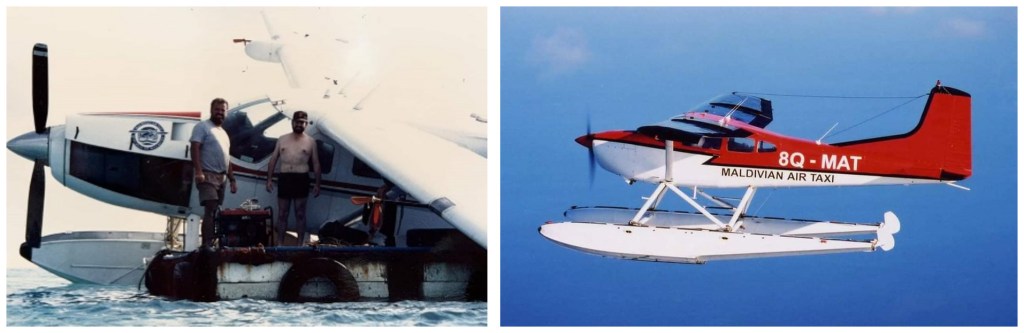
Commercial flying began with a single engine seaplane and a twin engine seaplane. A smaller single engine aircraft was used for training pilots. As the number of passengers increased, another twine engine aircraft was added to the fleet. It soon became clear that the single engine aircraft was not well suited to Maldivian sea conditions. It could not handle the waves and swells as well as the twin engine aircraft. The single engine aircraft later sank near Rasdhoo in North Ari Atoll, although the decision to stop using it had already been made by then. After this, single engine seaplanes were generally not used for regular passenger services. Another operator briefly tried using the type later, but the practice did not continue.
Why the Twin Otter Became the Main Aircraft
The experience gained during the early years showed that the Canadian built Twin Otter was very suitable for the Maldives. It was strong, reliable and able to operate from fairly small areas of water. It could also manage the changing wind, wave and water conditions found around our islands. At one time, the Twin Otter was considered an old aircraft because its original production had stopped. However, its practical design remained popular, and a newer version later went back into production.
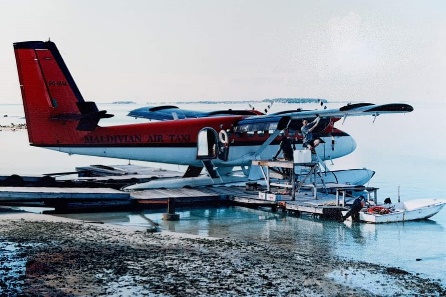
The Twin Otter remains the main aircraft used in Maldivian seaplane operations today. Its strong construction, simple design and ability to operate on floats make it well suited to our island environment. It can carry passengers to resorts that do not have airports, using only a suitable area of water and a floating platform. The aircraft may look small and simple when compared with a modern airliner, but it has played a very large part in the growth of tourism in the Maldives.
The ‘Bowling Alley’ and the Early Way of Flying
In the early days, seaplanes took off and landed in a narrow part of the lagoon that had been made deeper by dredging. This area ran almost in the same direction as the airport runway. There were shallow areas on both sides of the channel, so pilots could not always travel in a perfectly straight line. They sometimes had to make small changes in direction during takeoff or landing to avoid the shallow water. The foreign pilots who led the early operation gave this narrow channel the nickname ‘the bowling alley’.

Because the lagoon was very close to the airport runway, the airport control tower had to give permission before a seaplane could take off or land. Once the aircraft left the airport area, however, it mostly flew on its own. Seaplanes operated only during daylight, and pilots had to watch for other aircraft and keep away from them. In simple words, each pilot had to look outside, see other aircraft and make sure that other pilots could also see him. Pilots made radio calls when entering or leaving the airspace controlled by the airport. Once they flew beyond the area visible from the tower, they had to take greater responsibility for finding and avoiding other aircraft. This was the simple way in which regular seaplane operations began in the Maldives.
How Seaplanes Helped Tourism Grow
Seaplanes greatly reduced the time needed to reach distant resorts. This gave investors more confidence to develop islands farther away from Male’. Before seaplanes became available, an island located four or five hours away by boat was not always attractive to investors or tourists. A seaplane connection completely changed this. The same island could now be reached in less than an hour. As more resorts opened, more tourists came to the Maldives. More tourists created a greater demand for seaplanes, and this encouraged the operators to bring in more aircraft.
A large international airliner can bring several hundred passengers to the Maldives in one flight, while a Twin Otter can carry only a small number. The passengers arriving on one international flight may also be staying at many different resorts. They therefore have to be divided among several seaplane flights. Later, the same passengers must be brought back from their resorts in time to catch their international flights home. This makes seaplane flying a daily race against time. Everything must be completed during daylight and in suitable weather. One delay caused by bad weather or another problem can affect many flights that follow. This difference between the large number of passengers arriving by international aircraft and the small number carried by each seaplane is one of the main reasons why so many seaplane flights are needed every day.
The Need for Rules and Radio Reports
As more seaplanes entered service, the number of flights increased. However, there was still only one main channel for takeoffs and landings. Many aircraft wanted to leave in the morning and return later in the day, so some simple rules were needed to keep the operation safe and orderly. Departures were generally handled in the order in which pilots called the control tower. In simple words, the first aircraft to call was usually the first one allowed to depart.
Arrivals needed more careful handling. When several seaplanes were expected at about the same time, they had to be placed in an order. Some aircraft were asked to wait near selected islands on the western side of Male’ Atoll. The waiting aircraft were kept at different heights, usually with 500 feet between them. The tower then allowed them to continue towards the airport one by one. Most resorts served by seaplanes at that time were in Ari Atoll, with only a few in Baa and Lhaviyani Atolls. This was why many of the early reporting and waiting points were placed to the west of the airport.
There was no radar in those days. Once a seaplane flew beyond the area visible from the control tower, the controller could not see its exact position. Controllers depended on pilots reporting their positions over the radio and giving an estimated time of arrival. Using this information, the controller had to build a picture in his mind of where each aircraft was likely to be. This was manageable when there were only a few seaplanes, but it became much harder as the number of flights increased. Seaplanes also flew at low heights, and their radio signals could not always reach the airport control tower when they were far away.
A Special Radio Frequency for Seaplanes
More seaplanes began flying between resorts in Ari Atoll and between nearby atolls. Since they were flying at low heights, they could not always speak directly to the airport control tower. A separate radio frequency was therefore introduced for seaplane pilots. On this frequency, pilots reported where they were, where they were going and what they planned to do. Other pilots listening on the same frequency could hear these reports and understand where nearby seaplanes were likely to be.
This separate frequency was a simple local answer to a real problem. It was developed through cooperation between the seaplane operators and air traffic control, rather than being decided by one side alone. It helped pilots share traffic information when they were outside the radio coverage of the airport tower. The same basic system continues to be used today, even though modern aircraft-tracking systems now provide more information than was available during those early years.
How Dredging Changed the Lagoon
An important improvement came when Hulhumale was being reclaimed. Parts of the lagoon that were too shallow for seaplanes were dredged, and the sand removed from the seabed was used to create Hulhumale. The airport authorities, dredging companies and seaplane operators worked together so that some areas were made deeper in a way that also helped seaplane operations. This gave pilots more places from which to take off and land. It was especially useful when strong or changing winds made the normal channel difficult to use.

After the newly dredged areas were opened, seaplanes no longer had to depend completely on the ‘bowling alley’. Aircraft could use different parts of the lagoon, and more than one movement could sometimes be handled at the same time. This increased the number of flights that could be operated and brought great relief to both the seaplane operators and air traffic control. It was one of the most important early improvements made to the operation.
Growth Brought New Traffic Problems
The success of seaplane services encouraged resorts to open in more distant atolls. Seaplane routes then spread across a much larger part of the Maldives. This growth brought economic benefits, but it also created new safety problems. Seaplanes began meeting more aircraft flying to and from Velana International Airport. There were increasing reports of seaplanes passing too close to airliners and other aircraft near Male’.
Without radar, controllers could not continuously watch every aircraft. They had to depend on radio reports and estimated times. A controller had to work out where an aircraft was probably located by using its last reported position, speed and expected arrival time. Velana International Airport had only one runway and very little space for aircraft to move on the ground. The timing between arriving and departing aircraft was therefore very important. If the timing did not work, an arriving aircraft sometimes had to fly in circles near the airport while waiting for the runway to become free.
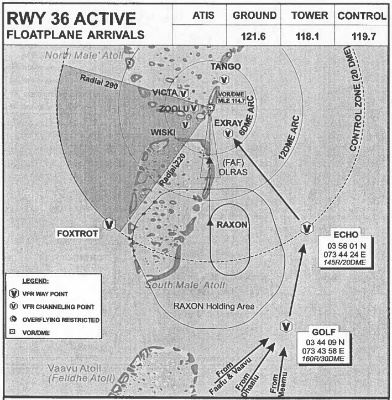
A large area of airspace had to be kept clear for aircraft approaching and leaving the runway. Seaplanes were kept away from this area, and special routes were introduced to guide them around the paths used by runway traffic. These became the first proper flight paths created especially for seaplanes. They brought more order to the operation, but they also reduced the amount of airspace that seaplanes could use freely.
The Arrival of Radar
Radar-based air traffic control began in the Maldives towards the end of 2009. For the first time, controllers could see the movement of properly equipped aircraft on a screen. This should have brought a major change in the way seaplanes were handled. However, radar alone could not solve every problem. The airspace, routes and working procedures also needed to be changed to make full use of the new system.
Many of these supporting changes did not happen at the same time. Much of the old airspace arrangement continued to be used, together with procedures created before radar was available. Radar gave controllers better information, but its full benefit could not be gained while many of the old arrangements remained in place. Meanwhile, the number of seaplane flights continued to rise, especially during the busiest times of the day. The operation had modern equipment, but in many ways it continued to follow an older method of working.
Airport Expansion and Less Open Space
Velana International Airport also had problems with aircraft movement on the ground. For many years, it did not have a full length taxiway running beside the runway. Large aircraft sometimes had to be pushed onto the runway before starting their engines. Arriving aircraft also had to remain on the runway while moving towards the parking area. This caused delays and made the runway more difficult to manage.
A new runway was later built beside the old runway. More parts of the lagoon were dredged, and the sand was used to expand the airport. The deeper water made it easier for seaplanes to move around. However, the growth of Hulhumale and the construction of new airport facilities reduced the amount of open space available around the lagoon. Three water lanes were eventually marked for seaplane takeoffs and landings, but the lanes were too close to each other to be used freely at the same time. At certain times, they could be used only for takeoffs or only for landings. Therefore, although the lagoon became deeper, development around it made the seaplane operation more difficult in other ways.

The Airspace Changes of 2022
Another major change came when aircraft operations moved to the new runway in 2022. By this time, more domestic airports had opened around the Maldives. Seaplanes were flying close to these airports and mixing with other aircraft, and reports of aircraft passing too close to one another were increasing. As far as possible, separate arrival and departure routes were introduced for seaplanes. These routes kept them away from the paths normally used by other aircraft.
The new routes made seaplane movements more orderly and easier to predict. Controllers had a better idea of where the seaplanes were likely to be, and pilots could be given better information about nearby aircraft. However, the number of close encounters did not fall as much as expected. Reports also began to appear of two seaplanes passing too close to each other. This had not been widely reported before. One possible reason was that the new routes placed more seaplanes in the same areas. The routes made their movements easier to predict, but they also brought more aircraft together.
Using Surveillance to Help Pilots
These close encounters showed the need for a better flight information service using radar and other aircraft tracking systems. Properly equipped aircraft can automatically send information about their identity, position, height and direction. This information can then be shown on a screen to the person providing the flight information service. The person watching the screen can warn a pilot about another aircraft that may not yet have been seen.
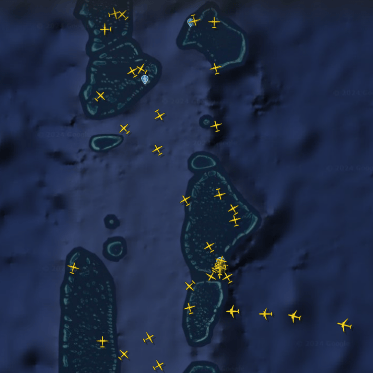
The pilot is still responsible for looking outside, seeing other aircraft and avoiding them. The service does not take away this responsibility. However, it can tell the pilot where another aircraft is, how high it is flying, which way it is travelling and how far away it is. It can also help a pilot who is unsure of his position or route. This gives both pilots and people on the ground a clearer picture of the traffic. A possible conflict can be noticed earlier, giving the pilots more time to take safe action. This is a major improvement over the early system, when controllers depended almost completely on radio reports and their own estimates.
What May Come Next
More domestic and smaller local airports are now being developed around the Maldives. These airports may provide another way of reaching islands that once depended mainly on seaplanes. New types of aircraft are also being developed around the world. Some are powered by electricity and can take off and land straight up without using a normal runway.
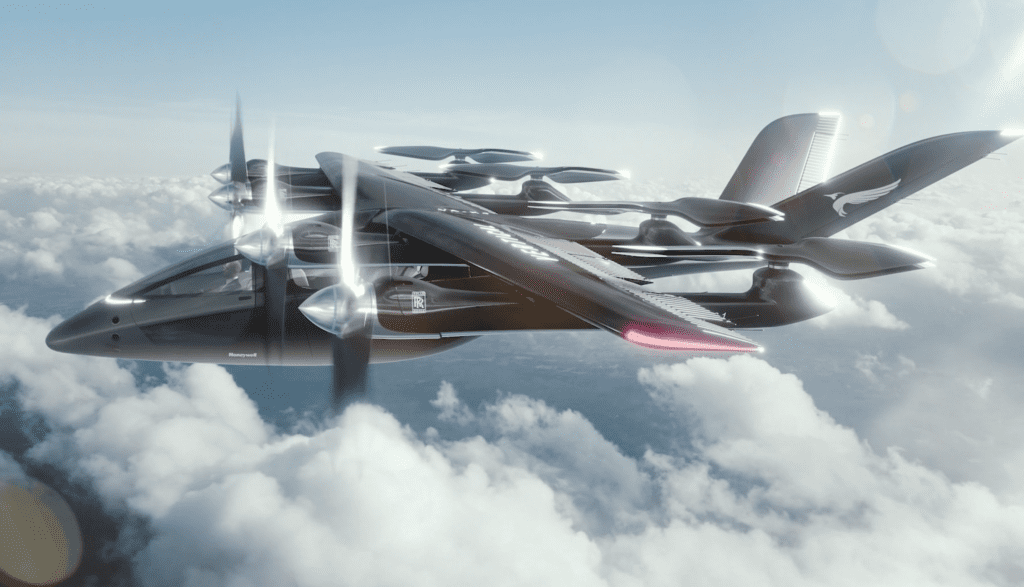
The Maldives seaplane operation may have reached the highest point in its growth. This does not mean that seaplanes will disappear soon. They are still very useful in a country made up of many small islands without airports. However, I believe a major change will eventually come. Whatever comes next must be suitable for the Maldives. It must be safe, dependable, affordable and less harmful to the environment. It may be an electric aircraft, a vehicle that takes off and lands straight up, or another type of aircraft that is still being developed.
One thing is clear. The skies over the Maldives will become busier. The aircraft of the future may not all be the familiar Twin Otters that we know today. They may be quieter, cleaner and able to do more of the flying automatically. Whatever replaces or works alongside the seaplane must still meet the special needs of our scattered islands and tourism industry.
A Maldivian Success Story
The Maldives seaplane story is not only about aircraft. It is also about the growth of tourism and the challenge of connecting hundreds of islands spread across a wide area of ocean. The operation started with a few aircraft, simple offices, one narrow water channel and basic radio procedures. It grew because it solved a real transport problem. Seaplanes allowed tourists to reach distant resorts quickly and gave investors the confidence to develop islands far away from Male’.
Each stage of growth brought new problems. More aircraft needed more rules. Shallow water had to be made deeper. Increasing traffic required special radio frequencies and flight paths. Aircraft passing too close to one another created the need for better tracking and traffic information. Most of these improvements came through experience and cooperation between pilots, air traffic controllers, airport authorities, seaplane operators and other organizations.
What we see today is the result of more than 30 years of learning and change. The seaplane has become an important part of Maldivian aviation and one of the main supports of our tourism industry. The operation will continue to change, just as it has changed from the very beginning. Whatever kind of aircraft comes next, the lessons learned from the Maldives seaplane story will remain important.


Leave a Reply