What a global aviation report tells us about jobs, everyday life and the future of the Maldives
Having spent more than forty six years in aviation, I have seen how easily we associate the industry with aircraft, pilots, airports and passengers. These are the things we see. But behind every flight is a much wider network of people and businesses, many of whom may never think of themselves as being connected to aviation. Their livelihoods nevertheless depend, in one way or another, on an aircraft arriving safely and on time.
Reading the November 2026 edition of Aviation: Benefits Beyond Borders, published by the Air Transport Action Group, brought this connection into focus for me. The report, with its main economic analysis carried out by Oxford Economics, looks at how air transport supports employment, business, tourism and communities around the world. Most of its economic figures refer to 2025, while its forecasts look ahead to 2045.
For us in the Maldives, much of this is something we can recognise from everyday life. We live on islands separated by the sea, and our economy depends heavily on people travelling from other countries. Aviation connects these two realities. It brings people to our country and helps move them across it, while supporting an enormous amount of work along the way.
A Flight Carries More Than Passengers
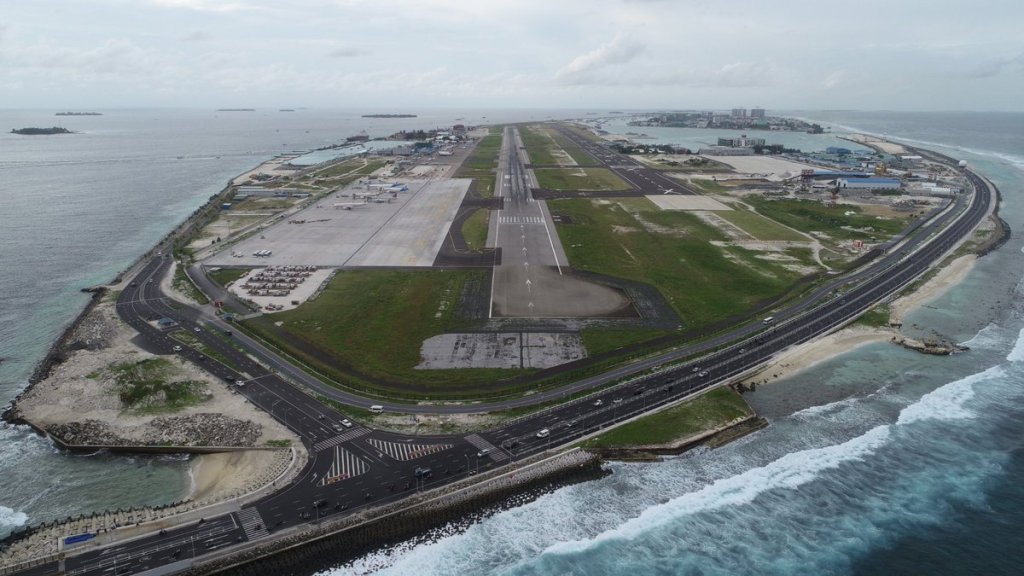
When an international flight arrives at Velana International Airport, we naturally notice the passengers getting off and the activity around the aircraft. We see ground staff, baggage vehicles, fuel trucks and the people preparing the aircraft for its next departure. What we do not immediately see is how far the benefit of that arrival extends.
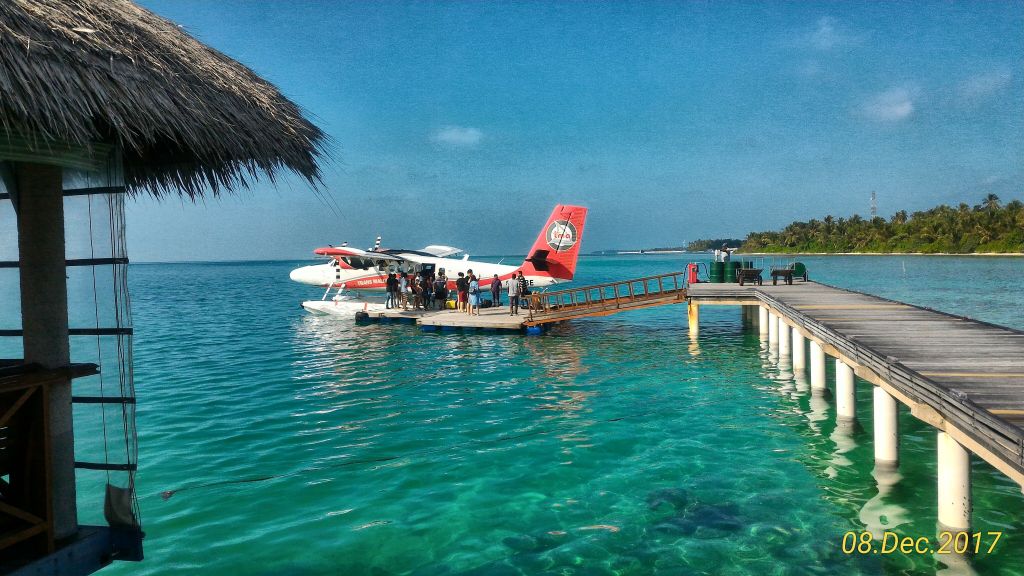
Some of those passengers will continue to resorts by seaplane, domestic aircraft or speedboat. Their arrival creates work for resort employees, boat crews, food suppliers, laundry workers, maintenance teams and many others. A local business supplying vegetables or repairing equipment may benefit from that flight without having any direct dealings with an airline.
This is the wider picture the report tries to explain. The value of aviation continues well beyond the airport boundary. An aircraft brings passengers, but those passengers bring demand for accommodation, food, transport and services throughout their stay.
The same applies when people travel for work, education, medical treatment or family reasons. The purpose of a flight cannot always be understood by counting the people on board. Each passenger has a reason for travelling, and some of those journeys can make a considerable difference to a family’s life.
Understanding the Big Numbers
The report estimates that aviation supported 99 million jobs worldwide in 2025 and contributed about US$5 trillion to the global economy. It puts this contribution at approximately 4.2 per cent of the world’s economic output. These are large figures, but their meaning becomes clearer when we look at what they include.
Of the 99 million jobs, about 12.5 million were directly within aviation. These included people working for airlines, airport operators, air navigation service providers, aircraft manufacturers and other businesses operating at airports. The remaining jobs were supported through suppliers, the spending of employees’ wages and tourism made possible by air travel.
For example, an airline buys goods and services from other businesses. Those businesses employ people, who then spend their wages on food, housing, transport and other needs. Meanwhile, tourists arriving by air spend money at hotels, guest houses, restaurants, shops and attractions. Aviation therefore supports several layers of economic activity.
It would be misleading to describe all 99 million people as aviation employees. The report is describing jobs supported by aviation, which is a much broader measure. This distinction matters because impressive figures only become useful when we understand what is being counted.
What the Report Says About the Maldives
The Maldives entry estimates that aviation and the tourism it makes possible supported around 248,000 jobs and US$5.7 billion in economic activity in 2025. Within that total, it identifies approximately 5,000 direct aviation jobs. Most of the estimated employment contribution, around 234,000 jobs, falls under tourism supported by air travel.
These figures show how strongly the report connects our tourism economy with aviation. They do not mean that 248,000 people work for our airlines and airports. They represent a wider estimate that includes work supported by visitors who reach the Maldives by air.
I would also treat these figures as estimates to be understood alongside our own national employment and economic statistics. The report uses economic models and several data sources to produce comparable results across countries. Such an exercise is useful, but it does not replace a detailed local examination of who is employed, where they work and how the benefits are distributed.
There is another point we should keep in mind. The tourism benefits included in aviation’s economic contribution also belong to the tourism economy. We cannot simply add the full aviation supported figure to a separate tourism figure and assume that we have calculated a new total. Some of the same activity would be counted twice.
For me, the most useful message is the relationship behind the figures. Our tourism industry depends on air access, and our aviation industry depends heavily on tourism demand. Planning either one without considering the other would leave out an important part of the picture.
For Island Countries, Connection Is a Daily Need
The report gives particular attention to small island states. Across the countries included in this grouping, it estimates that air transport supported about two million jobs and US$47 billion in economic activity in 2025. This represented roughly one in twelve jobs and 12 per cent of their combined economic output.
These are figures for the group as a whole. They should not be taken as describing every island country in the same way. Nevertheless, they show why aviation has a particular importance where communities are separated by water and international markets are far away.
In the Maldives, we understand this without needing an economic model to explain it to us. A person may need to travel for medical care, a student may be leaving for further education, or a family may be trying to reach a relative urgently. The value of that connection goes beyond the ticket price.
I remember the occasional medical evacuation flights during my early years at Hulhule Airport. The Maldives did not have many of the medical facilities available today, and some of those flights required us to keep the airport open late into the night or into the following morning. Behind the operational arrangements was a person who needed help and a family waiting anxiously.
That experience has stayed with me. Aviation serves an economy, but it also serves people at moments when access and time matter greatly.
Tourism Begins Before the Tourist Reaches the Resort
The report states that 58 per cent of international tourists worldwide travelled by air in 2025. For a destination such as the Maldives, the connection between air travel and tourism is particularly easy to see. The visitor’s journey depends on several services working together before the holiday can properly begin.
A comfortable international flight is only one part of that journey. Immigration, baggage delivery, onward transfers and communication during delays also affect the visitor’s experience. A resort may provide excellent service, but difficulties in reaching it can still shape how the guest remembers the visit.
This is why I believe airport development and tourism development should be planned together. Additional resort beds create transport demand. Additional flights create pressure on terminals, baggage systems, aircraft parking, airspace and onward connections. Each part affects the next.
The practical question is therefore broader than whether we can attract another flight or open another property. We also need to consider whether the whole journey can be handled safely, reliably and comfortably during the busiest periods.
Cargo Has a Value We Often Overlook
Passenger travel attracts much of the public attention, but the report also describes the importance of air cargo. It estimates that air transport carried around 29.5 per cent of world trade by value in 2025, despite carrying only about 0.8 per cent by volume. The difference reflects the importance of goods that are valuable, urgent or sensitive to delay.
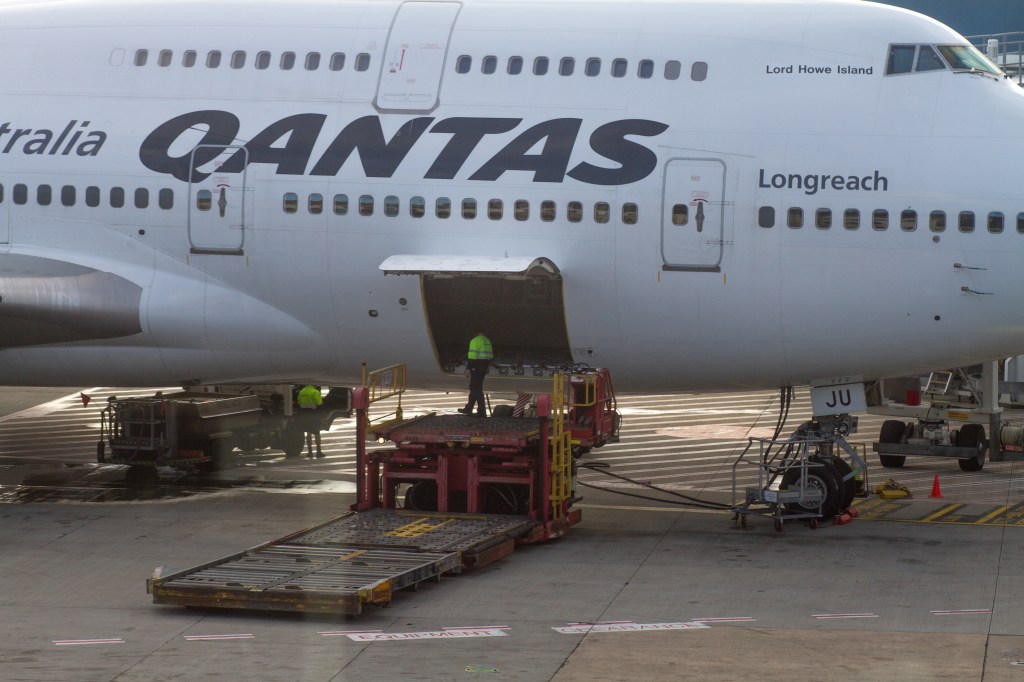
An aircraft part needed to return an aircraft to service may occupy very little space. Its arrival can nevertheless prevent a long disruption. The same principle applies to medicines, medical equipment, electronic components and certain perishable products.
For an island economy, we need to understand the different purposes served by sea and air transport. Ships can carry large quantities economically, while aircraft provide speed when waiting would create a serious problem. Both form part of the supply network on which businesses and households depend.
This also gives aviation a role during emergencies. When access is difficult or supplies are urgently needed, the ability to move people and goods quickly can become far more important than the normal commercial value of the service.
Tomorrow’s Aviation Needs People Today
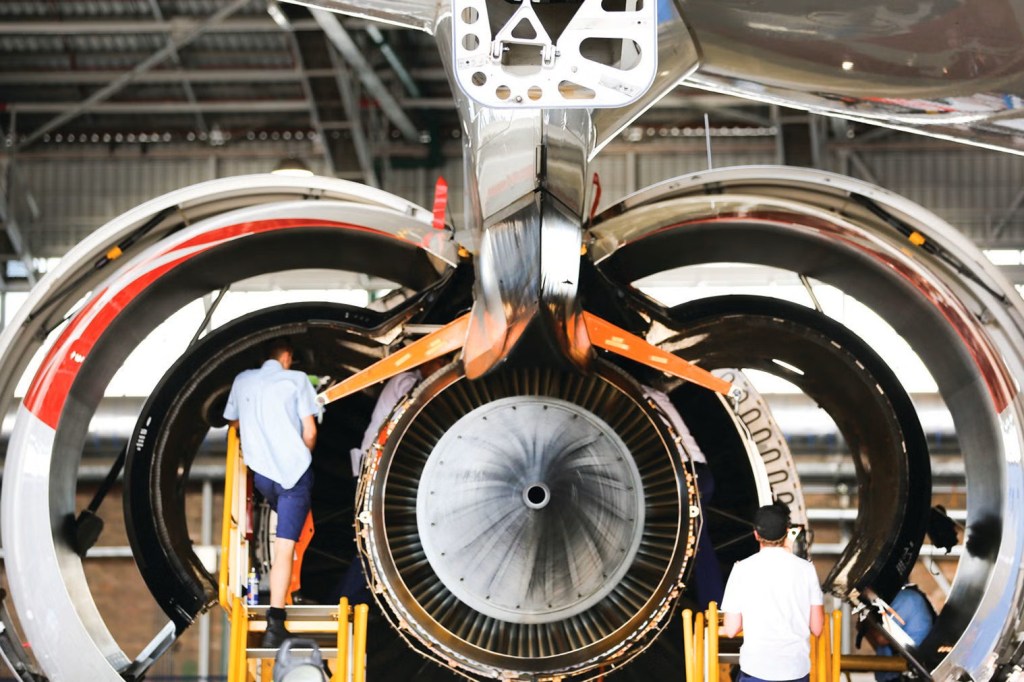
One of the report’s strongest messages concerns the workforce. It projects that direct aviation employment could rise from 12.5 million jobs in 2025 to about 19.7 million by 2045. It also points to substantial recruitment needs for pilots, maintenance technicians, cabin crew and many other occupations over the next two decades.
For a young person in the Maldives, this should encourage a wider understanding of aviation careers. There are opportunities in air traffic control, engineering, airport operations, safety management, security, information technology, logistics and many other fields. The industry needs people with different abilities and interests.
However, identifying a future need is only the beginning. Training must be accessible, relevant and followed by opportunities to gain practical experience. A qualification alone does not make someone ready to carry every responsibility associated with a job.
From my own experience, some aviation skills take years to develop. Classroom learning provides the foundation, but judgement grows through supervised work, exposure to different situations and guidance from experienced colleagues. That process needs time and proper attention.
We should therefore plan the workforce while we plan the infrastructure. A new facility needs trained people to operate, maintain and manage it. Recruitment and training should be part of the development programme from the beginning.
Experience Must Be Passed On
The report discusses the challenge of experienced employees approaching retirement. This deserves attention because aviation depends on knowledge that is not always fully captured in a manual. People learn how to recognize developing problems, coordinate under pressure and apply procedures to circumstances that are not quite the same as the training example.
I have benefited from colleagues and instructors who took the time to explain why something was done in a particular way. That understanding was often more valuable than simply being told to follow an instruction. It helped me apply what I had learned when the circumstances changed.
Passing on experience should therefore be a deliberate part of an organization’s work. Mentoring, supervised practice and honest discussion of past occurrences can help younger staff develop sound judgement. Experienced people, in turn, should remain willing to listen to new ideas and changing methods.
If we allow knowledge to leave with retiring staff without making arrangements to pass it on, we create a gap that may take years to fill. For a small aviation community, that loss can be particularly difficult to absorb.
New Technology Still Needs Sound Judgement
The report describes growing demand for skills in digital systems, cybersecurity, artificial intelligence and environmental technology. These developments will affect many aviation jobs. They can help organizations analyze information, anticipate maintenance needs and improve the use of resources.
However, the usefulness of a system depends on the quality of its information and the understanding of the people using it. Staff need to know what the system can do, what its limitations are and what action to take when the information appears wrong or the equipment becomes unavailable.
Having seen aviation move through several generations of equipment, I believe training must develop understanding alongside familiarity. Being able to operate a display or select an option is only part of the task. People must also understand the operational situation behind what appears on the screen.
Technology can support good decisions. Organizations still need competent people who can question, interpret and act on the information it provides.
Growth Must Be Matched by Operational Capacity
The report’s central forecast suggests that aviation could support about 138.6 million jobs and US$10.2 trillion in economic activity worldwide by 2045. It assumes average annual growth in air transport demand of approximately 3.8 per cent. These are forecasts, and the report recognizes that economic conditions, conflict and other disruptions could change the outcome.
For the Maldives, the prospect of growth creates opportunities and responsibilities together. More passengers can support more business and employment. They also create additional demands on the systems and people handling their journeys.
From my perspective, this is where operational planning becomes essential. Terminal capacity, runway use, aircraft parking, seaplane facilities, airspace, maintenance support and emergency response must develop in a coordinated way. A shortage in one area can affect the performance of several others.
The safety implications I draw from this are my own professional observations. An economic forecast does not tell us whether a particular operation has enough trained staff or whether an emergency arrangement will work in practice. Those questions need their own careful examination as traffic grows.
Our measure of progress should therefore include how reliably and safely we handle the traffic we attract. Passenger numbers tell us how much activity there is. They do not, by themselves, tell us how well the system is coping.
Aviation’s Benefits Come With Environmental Responsibilities
The report also addresses aviation’s environmental impact. It records airline carbon dioxide emissions of about 942 million tonnes in 2024 and gives an estimate of approximately 985 million tonnes for 2025. It describes efforts involving more efficient aircraft, improved operations, sustainable aviation fuel and other measures.
Sustainable aviation fuel is one of the main areas of attention. The report explains that some production methods can reduce emissions substantially over the fuel’s full life, compared with conventional fossil fuel. This includes how the fuel is produced and supplied, as well as its use in an aircraft.
That does not mean an aircraft burning such fuel produces no carbon dioxide. The benefit depends on the source of the fuel and the way it is made. The report also shows how much work remains. Sustainable aviation fuel represented less than one per cent of global aviation fuel use in 2025.
For the Maldives, this discussion has particular importance. We depend on aviation to bring visitors and connect us with the world, while our natural environment is central to both our way of life and our tourism economy. We therefore have a direct interest in practical progress that reduces aviation’s environmental impact.
Locally, that includes examining unnecessary fuel use, avoidable delays, airport energy consumption and the efficiency of operations. Larger changes will require international cooperation, investment and technology. Our responsibility is to understand where we can make a useful contribution and act on it.
Looking Beyond the Airport Boundaries
When I joined Hulhule Airport in October 1979, traffic was light and the airport was a very different place. Over the years, I watched the growth of the airport alongside the growth of tourism and the wider country. What began as a small operation became part of a much larger network of livelihoods and expectations.
This report helps put that experience into a global context. It shows why decisions about aviation affect far more than airlines and airports. They can influence employment, education, medical access, trade and the opportunities available to communities.
For me, the lesson is to plan with that wider connection in mind. We need infrastructure, trained people, sound operations and the ability to learn as conditions change. The better we understand the lives and livelihoods behind each flight, the better placed we will be to develop aviation in a way that serves the Maldives well.
Source: Air Transport Action Group, Aviation: Benefits Beyond Borders, November 2026, with economic analysis by Oxford Economics. Figures quoted above are the report’s estimates, mainly for 2025. Monetary values are in US dollars at 2025 prices unless stated otherwise. The report advises that changes in data and methods mean its figures should not be directly compared with earlier editions.


Leave a Reply